How to Organize Your Pantry: Step-by-Step Guide

That moment when you open your pantry and can actually find what you need? It’s possible. Whether you’re dealing with expired mystery cans, toppled cereal boxes, or that avalanche waiting to happen—this guide will transform your pantry chaos into calm.

What You’ll Need

Time needed: 2-4 hours | Difficulty: Easy

Required:

  • Trash bags
  • Cleaning supplies
  • Boxes for donations
  • Notepad for shopping list

Recommended:

Pro tip: Don’t buy storage products until you’ve completed Steps 1-4!

Step 1: Empty Everything (Yes, Everything)

Take every single item out of your pantry. As you remove items, sort into four piles:

  • Keep: Items you use regularly and aren’t expired
  • Toss: Expired items, stale food, broken seals
  • Donate: Unopened, unexpired items you won’t use
  • Relocate: Items that don’t belong in the pantry

Check Those Expiration Dates

  • Spices: Lose potency after 2-3 years
  • Flour: All-purpose 6-8 months
  • Oils: Go rancid within 6-12 months of opening
  • Baking powder/soda: 6-12 months

Step 2: Clean and Measure Your Space

Cleaning checklist:

  • Wipe down all shelves
  • Vacuum or sweep the floor
  • Check for signs of pests
  • Let everything dry completely

While it’s empty, measure each shelf: width, depth, and height between shelves. Write these down for shopping!

Step 3: Categorize Your Items

Group similar items together:

  • Baking supplies: Flour, sugar, baking soda, vanilla
  • Grains & pasta: Rice, pasta, quinoa, oats
  • Canned goods: Vegetables, beans, tomatoes, soups
  • Snacks: Chips, crackers, granola bars, nuts
  • Breakfast: Cereal, oatmeal, pancake mix
  • Condiments & sauces: Oils, vinegars, hot sauce

Step 4: Create Your Layout Plan

The Zone System

Eye-level (prime real estate): Daily-use items like cereal, snacks, go-to condiments.

Below eye level: Frequently used items like canned goods, pasta, rice.

Low shelves: Heavy items, bulk items, backup stock.

High shelves: Rarely used items, seasonal items.

Door: Small, light items like spices and snack bars.

Step 5: Choose Your Storage Solutions

Worth the Investment

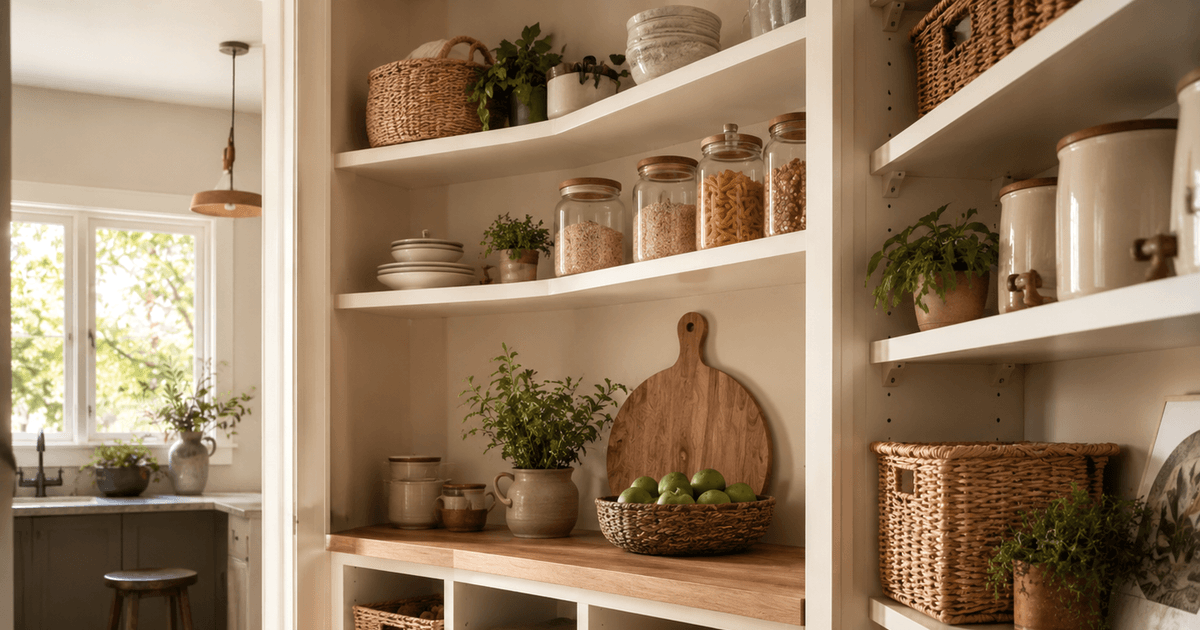
Airtight containers for items that go stale (flour, sugar, cereal, crackers). They also prevent pantry moths.

Shop Airtight Containers →

Clear bins for grouping small items (snack bars, sauce packets, tea bags).

Shop Clear Bins →

Lazy susans for deep shelves or corners. Spin to access instead of digging.

Shop Lazy Susans →

Shelf risers to double your shelf space and see items in back rows.

Shop Shelf Risers →

Step 6: Put Everything Back (Strategically)

  • Put containers in first, then fill them
  • Face labels forward for easy identification
  • Leave some empty space (aim for 80% full max)
  • Store like with like
  • Put newer items in back (first in, first out)

Common Mistakes to Avoid

  • Stacking cans more than 2-3 high
  • Putting heavy items on door shelves
  • Cramming everything in
  • Hiding items behind other items

Step 7: Label Everything

Labels help everyone find AND return items to the right spot.

What to label:

  • All decanted containers
  • Bins by category (“Snacks,” “Baking”)
  • Expiration dates on bulk items

Label maker recommendation: The Brother P-Touch creates clean, professional labels.

Shop Label Makers →

Maintaining Your Organized Pantry

Weekly (5 minutes)

  • Quick visual scan
  • Move items to front as things empty
  • Toss anything expired

Monthly (15 minutes)

  • Check expiration dates
  • Wipe down shelves
  • Assess if categories need reorganizing

Frequently Asked Questions

How long does it take to organize a pantry?

A typical pantry takes 2-4 hours. Larger walk-in pantries may take 4-6 hours.

Do I need to buy containers?

No! You can organize effectively with what you have. Containers help with freshness and aesthetics, but they’re not required.

How do I organize a small pantry?

Use every vertical inch: shelf risers, door organizers, and stacking containers. Store backup items elsewhere.

How do I prevent pantry moths?

Store grains and flour in airtight containers. Freeze flour for 48 hours before storing. Keep pantry clean.

Your Organized Pantry Awaits

An organized pantry isn’t about perfection—it’s about function. Start this weekend. Even if you only get through Step 1, you’ve made progress!

Questions? Drop us a message—we love helping solve organization puzzles.

Happy organizing! 🏠


Related: Best Pantry Storage Containers (2025)

This post contains affiliate links. See our affiliate disclosure for details.

Leave a Comment