We research, compare, and evaluate every product we recommend, and only describe a pick as directly tested when that is specifically documented. As an Amazon Associate I earn from qualifying purchases. When you buy through our links we may earn a commission -- at no extra cost to you. Full disclosure.
Stackable storage bins can reclaim unused vertical space, but the word stackable gets applied too loosely. A true stack needs a manufacturer-designed interface or load-bearing lid. Handled pantry bins, fabric baskets, and wire organizers may organize one shelf level without being safe to load directly on top of one another.
This guide separates six current options into three jobs: bins designed to stack, bins designed for single-level access, and a shelf riser that creates a supported second level. Every Amazon link points to the exact configuration described below and uses the Clever Home Storage tracking ID. Prices, sellers, package sizes, and availability can change.
Quick answer: Choose the IRIS open-front bins for daily-access stacking, the IRIS latching clip boxes for lidded stacking, and the Simple Houseware riser when the organizers you already own are not self-stacking. Use the Vtopmart, DECOMOMO, and wire baskets as single-level organizers unless the current manufacturer instructions for the exact item explicitly allow loaded stacking.
The 6 Exact Storage Options at a Glance
- IRIS X-Large Open-Front Bins: best for reaching lower contents without unstacking
- IRIS 32.5-Quart Clip Boxes: best for lidded, infrequently accessed storage
- Vtopmart XL Handled Bins: best for pulling categories forward from deep shelves
- DECOMOMO Fabric Baskets: best for lightweight closet and linen storage
- 15.2-Inch Wire Baskets: best for visible, ventilated single-level storage
- Simple Houseware Shelf Organizer: best for adding a supported second level
1. IRIS USA X-Large Open-Front Stackable Bins, 4-Pack
The current listing identifies these clear plastic organizers as stackable and gives each bin dimensions of 13 inches long, 10 inches wide, and 8 inches high. The open front keeps lower contents reachable without lifting off the bin above, which is the main advantage over lidded storage.
Best fit: Snacks, packaged pantry items, craft supplies, and other categories you reach for frequently. Tradeoff: The open front does not protect contents from dust, spills, or pests.
2. IRIS USA 32.5-Quart Clip Boxes with Latching Lids, 6-Pack
The current listing describes these 32.5-quart boxes as stackable and space-saving, with exterior dimensions of 18.5 by 15.13 by 9.38 inches. The translucent body keeps contents visible, while the latching lid makes the format better suited to infrequently accessed categories than open-front bins.
Best fit: Closets, craft rooms, offices, and shelves holding seasonal or occasional-use items. Tradeoff: Reaching a lower box may require removing the boxes above it. Follow the current stacking and load guidance.
3. Vtopmart XL Clear Handled Storage Bins, 6-Pack
Each current bin measures 13 by 7.4 by 7 inches and has integrated handle grips. This format is useful when a pantry, refrigerator, or cabinet is deep enough for loose items to disappear at the back. Pull the whole category forward instead of reaching past the front row.
Best fit: Deep shelves, refrigerators, freezers, cabinets, and under-sink categories. Tradeoff: The current listing calls for hand washing and does not document loaded self-stacking, so use these on one level or beneath a load-rated riser.
4. DECOMOMO Large Fabric Storage Baskets, 3-Pack
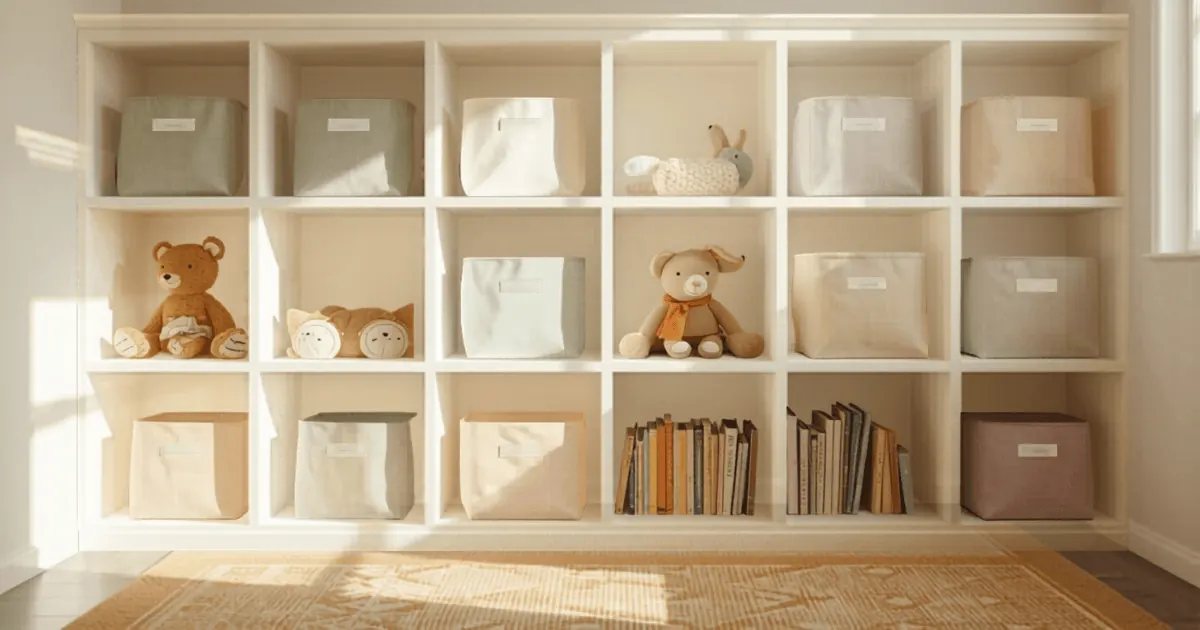
Fabric baskets create a softer-looking way to group clothing, linens, and accessories on open shelves. The current three-pack is best treated as single-level storage. A structured base can help a fabric bin hold its shape, but it does not create a safe load-bearing top.
Best fit: Closet shelves, linen storage, nurseries, and shared rooms where labels and a softer appearance matter. Tradeoff: Fabric is less protective and harder to wipe clean than rigid plastic.
The current six-pack lists each basket at approximately 15.2 inches long, 10.5 inches wide, and 5.9 inches high. Integrated handles make the baskets easier to pull from a pantry, freezer, cabinet, or shelf, and the open wire construction keeps contents visible.
Best fit: Packaged pantry goods, dry laundry supplies, freezer categories, and utility storage where visibility matters. Tradeoff: The listing says empty baskets can nest or stack for storage; that does not mean filled baskets should carry one another. Use them on one level unless the current instructions state otherwise.
6. Simple Houseware Expandable Stackable Shelf Organizer
This metal shelf organizer creates a supported second level for short bins, boxes, dishes, or pantry goods. The current listing measures 11.25 inches long, 7.9 inches wide, and 5.4 inches high. It is a better vertical-space solution when the organizers you own have open tops or rims that were not designed to carry weight.
Best fit: Cabinets and fixed shelves with unused height above short organizers. Tradeoff: This is a riser, not a bin, and the shelf beneath it must still carry the combined load.
How to Choose Without Creating an Unstable Stack
Start with access frequency
Open-front stacking works best for frequently used items because lower contents remain reachable. Lidded stacking works better for occasional-use categories because protection matters more than instant access. Handled bins work best when depth, not height, is the main problem.
Measure usable height
Measure the clear space between shelves, including hinges, trim, and the room needed to pull a bin forward. For a two-high stack, compare the combined exterior height with the shelf opening. Do not assume two products with similar dimensions have compatible rims or lids.
Use one documented model per stack
Matching brand names do not prove that different sizes or generations stack safely. Build a loaded stack only with the exact model and size the manufacturer identifies as compatible, and follow the current load limit. Keep the heaviest container at the bottom.
Use a riser when the bin is not load-bearing
A load-rated shelf riser transfers weight through its own frame instead of through an open bin. That makes it the safer way to add a second level above handled pantry bins, fabric baskets, or other organizers without a documented stacking interface.
Frequently Asked Questions
How high can storage bins be stacked?
There is no universal safe number. Follow the exact product's stacking and load limits, stay within the shelf or floor rating, and stop if the stack leans or bows. Homes with children, pets, or earthquake risk benefit from lower stacks or anchored shelving.
Can bins from different brands be stacked together?
Assume they cannot unless the manufacturers document compatibility. Similar measurements do not prove that rims, lids, and loads work together.
Are clear or opaque bins better?
Clear bins make contents easier to identify without labels. Fabric or opaque organizers create a calmer appearance on open shelves but usually need labels. The better choice depends on whether visibility or visual concealment matters more in that room.
The Bottom Line
Choose the IRIS open-front bins for true daily-access stacking and the IRIS clip boxes for lidded stacking. Choose Vtopmart handled bins, DECOMOMO fabric baskets, or the wire organizers for single-level category storage. Add the Simple Houseware riser when you need a supported second level above products that were not designed to carry another loaded bin.
For more exact comparisons, see the pantry container guide, Sterilite vs. IRIS vs. Rubbermaid comparison, under-bed storage guide, and refrigerator organizer guide.