CleverHomeStorage is reader-supported. When you buy through links on our site, we may earn an affiliate commission at no extra cost to you.
Kitchen Organization: The Complete Room Guide
The kitchen is the hardest room in the house to keep organized. Every surface competes for space: appliances, pantry goods, utensils, cleaning supplies, and cookware. This guide covers every zone in the kitchen with tested product picks, zone-by-zone strategies, and links to our deep-dive articles.
Quick Picks: Best Kitchen Organization Products
| Product | Best For | Where to Buy |
|---|---|---|
| OXO Good Grips Cabinet Organizer | Cabinet shelf doubling | View on Amazon |
| Bamboo Drawer Dividers | Utensil drawer organization | View on Amazon |
| Lazy Susan Turntable (2-pack) | Corner cabinets and pantry shelves | View on Amazon |
| Under-Sink Expandable Shelf | Under-sink doubling | View on Amazon |
| Pull-Out Cabinet Organizer | Deep lower cabinet access | View on Amazon |
| Magnetic Knife Strip | Counter space recovery | View on Amazon |
Zone-by-Zone Kitchen Organization
Zone 1: Upper Cabinets
Upper cabinets store dishes, glasses, and less-used items. The biggest waste here is vertical space. Stack plates with plate separators. Use cabinet shelf risers to double your usable shelf space. Store items you use daily at eye level; push seasonal pieces to top shelves.
Keep glasses upright, never stacked. Stacking chips rims and makes retrieval awkward. A simple two-shelf cabinet organizer gives you a dedicated row for mugs and a separate row for glasses without mixing them.
Zone 2: Lower Cabinets and Corner Units
Lower cabinets are where organization breaks down fastest. Pots slide against each other, lids scatter everywhere, and corner cabinets become dead zones. The fix is pull-out systems and lazy Susans.
For pots and pans: a vertical pot lid organizer keeps lids accessible without stacking. For corner cabinets: a lazy Susan turntable recovers space that would otherwise sit empty. Pull-out organizers installed inside deep cabinets bring everything to the front instead of forcing you to excavate.
Zone 3: Drawers
Most kitchen drawers fail because they try to hold too much. Dedicate one drawer to utensils, one to gadgets, one to wraps and bags, one to towels. Bamboo drawer dividers with adjustable sections fit any drawer width and keep categories separated without the need for fixed inserts.
If you only have two or three drawers, use stackable drawer bins inside each one to create subcategories within a single drawer.
Zone 4: Under the Sink
Under-sink storage gets destroyed by the plumbing. An expandable two-tier shelf fits around the drain pipe and creates an upper shelf for bottles and a lower shelf for larger items. Add a small tension rod across the front of the cabinet to hang spray bottles by their triggers, freeing the shelf space entirely.
Keep cleaning supplies here, not food. The moisture under the sink makes it unsuitable for pantry overflow.
Zone 5: Countertops
Countertops should hold only what you use every day. Toaster, coffee maker, maybe a knife block. Everything else should go into a cabinet or drawer. A wall-mounted magnetic knife strip replaces a countertop knife block and frees up six inches of counter real estate immediately.
Use a small tiered organizer or lazy Susan near the stove for oils, salt, and frequently used spices. This keeps them accessible without spreading across the counter.
Zone 6: The Pantry
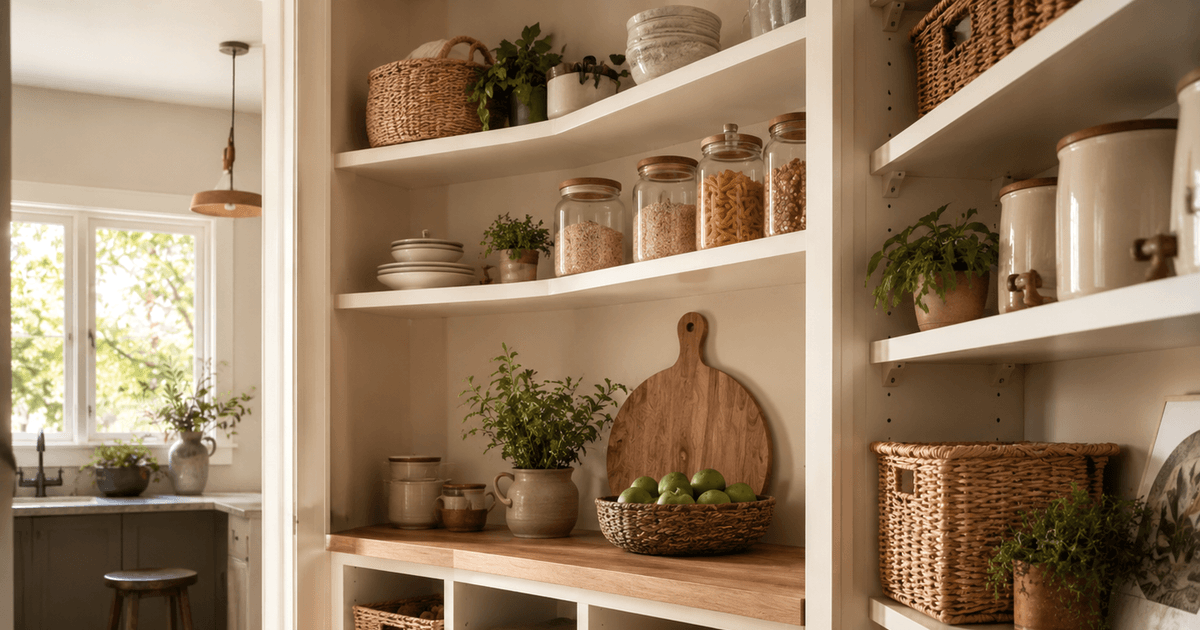
The pantry is its own project. See our full pantry organization hub for zone-by-zone pantry strategy. Key principle: group by category, label everything, use clear containers for dry goods so you can see quantities at a glance.
Complete Kitchen Organization Guide Index
- How to Organize Under the Kitchen Sink
- Best Kitchen Drawer Organizers (Tested)
- 27 Small Kitchen Organization Ideas
- Best Kitchen Cabinet Organizers
- How to Organize Your Fridge
- Best Lazy Susan Organizers
- Best Spice Rack Organizers
- Best Shelf Risers for Cabinets
- Best Refrigerator Organizer Bins
Kitchen Organization by Kitchen Type
Small Kitchens (Under 100 sq ft)
Small kitchens need vertical thinking. Pull everything off the counters and go up: wall-mounted magnetic strips for knives and metal utensils, over-door organizers on pantry or cabinet doors for spices and packets, pegboards for pots. Use the back of every cabinet door. These surfaces are almost always wasted in small kitchens.
Our full guide on small kitchen organization covers 27 specific ideas for tight spaces.
Galley Kitchens
Galley kitchens have two walls to work with. Keep one side for prep and cooking, one side for storage and cleanup. Do not mix zones. The biggest mistake in galley kitchens is letting storage overflow into the prep wall. Use deep pull-out drawers instead of lower cabinets wherever possible, as drawers give you full access to the contents without crouching and digging.
Open-Plan Kitchens
Open kitchens are highly visible, which means clutter reads worse than in a closed kitchen. The kitchen island, if you have one, should have drawers or shelving underneath. Keep the counters clear, use cabinet doors to hide clutter, and invest in matching containers so pantry items look intentional when visible.
The One-Day Kitchen Organization Reset
You do not need a full renovation to get your kitchen under control. A one-day reset is enough for most kitchens:
- Empty one zone at a time. Do not pull everything out at once. Start with upper cabinets, sort and purge, then move to lower cabinets.
- Purge aggressively. Any appliance you have not used in six months goes. Any pan with a damaged coating goes. Duplicates go.
- Group before you put things back. Like items together. All baking tools in one cabinet. All pots and pans in one lower cabinet. Do not scatter categories across multiple zones.
- Install organizers before restocking. Add shelf risers, drawer dividers, and lazy Susans before you put anything back.
- Label shelves. Even if you live alone, labels keep categories from drifting over time.
Common Kitchen Organization Mistakes
- Storing the same category in multiple locations. If your spices are in three different places, you will keep buying duplicates.
- Ignoring the cabinet door. Every cabinet door is potential storage. Over-door organizers add a full shelf without taking up cabinet space.
- Keeping expired food. Do a quarterly purge of pantry and fridge. Expired food wastes the most valuable real estate in both spaces.
- Under-investing in drawer organization. Drawer dividers cost less than $20 and eliminate the single biggest source of kitchen chaos.
- Putting heavy items up high. Heavy pots, stand mixers, and large appliances should be stored low and close to where they are used.
Frequently Asked Questions
What is the best way to organize a small kitchen with no storage?
Go vertical. Wall-mounted magnetic knife strips, over-door organizers on every cabinet door, and pegboards for pots recover significant storage without adding footprint. Use the inside of cabinet doors, the sides of the refrigerator, and any wall space near the stove.
How do I organize kitchen cabinets efficiently?
Group items by use zone: cooking tools near the stove, dishes near the dishwasher, glasses near the sink. Add shelf risers to upper cabinets to double vertical space. Use pull-out organizers in lower cabinets to eliminate the need to dig for items in the back.
What kitchen organizers are worth the money?
Drawer dividers, lazy Susans, under-sink expandable shelves, and pull-out cabinet organizers give the highest return per dollar. Cabinet shelf risers are the single highest-impact purchase for most kitchens at under $20.
How do I keep my kitchen organized long-term?
Everything needs a home. If an item does not have a specific place, it will default to a counter or a pile. After your initial organization reset, do a five-minute nightly reset: put everything back in its zone, wipe counters, deal with mail and papers. Monthly, do a five-minute pantry and fridge check for expiration dates.