We research, compare, and evaluate every product we recommend, and only describe a pick as directly tested when that is specifically documented. As an Amazon Associate I earn from qualifying purchases. When you buy through our links we may earn a commission -- at no extra cost to you. Full disclosure.
Older apartments, studio units, converted lofts, and city rentals frequently have one thing in common: almost no closet space. A single shallow coat closet for a 600-square-foot apartment. A bedroom with zero built-ins. A bathroom with one cabinet under the sink. What architects designed for a different era of ownership is now what you have to work with.
The good news is that a closet-free apartment is a solvable problem. The solutions are not hacks or workarounds -- they are the same storage systems designers use in small European apartments and micro-unit hotels. This guide covers 12 specific solutions, organized by room, that create real storage capacity without requiring you to own the apartment or damage the walls.
Quick Overview: Best Storage Solutions for Apartments Without Closets
| Solution |
Best Room |
Storage Added |
Renter-Safe |
| Freestanding wardrobe |
Bedroom |
Full closet replacement |
Yes |
| Clothing rack with shelf |
Bedroom / living room |
30-50 items + shelf |
Yes |
| Under-bed storage containers |
Bedroom |
3-6 cubic feet per bed |
Yes |
| Over-door organizers |
Any door |
20-40 pockets |
Yes |
| Vertical open shelving |
Living room / bedroom |
30-80 cubic feet |
Yes (freestanding) |
| Ottoman storage |
Living room |
10-20 liters |
Yes |
| Bed frame with drawers |
Bedroom |
4-6 large drawers |
Yes |
| Pegboard freestanding panel |
Kitchen / office |
Customizable surface |
Yes |
| Tension rod shelf systems |
Kitchen cabinets |
Doubles cabinet layers |
Yes |
| Rolling utility cart |
Kitchen / bathroom |
3-4 shelves mobile |
Yes |
| Stackable clear bins |
Any room |
Modular, scales with need |
Yes |
| Hanging shelf organizer |
Bedroom corner / entry |
5-6 fabric shelves |
Yes |
Bedroom Storage Without a Closet
1. Freestanding Wardrobe: The Full Closet Replacement
A freestanding wardrobe is the most direct replacement for a missing closet. It stands on its own, holds a full range of hanging clothes and folded items, and moves with you when you leave. The best options for renters are solid-construction wood wardrobes with hanging rod, shelf, and optional drawer configurations -- not fabric cover wardrobes, which are fine for light use but deteriorate quickly under daily load.
What to look for: a wardrobe at least 47 inches wide (narrow wardrobes run out of hanging capacity quickly), adjustable interior shelving, and a door style that does not require wall clearance (sliding or mirrored sliding doors work in tight bedrooms). For small bedrooms, a corner wardrobe or an L-shaped unit uses wall corner space that is otherwise wasted.
Capacity note: A standard 47-inch wardrobe holds approximately 25-35 hanging garments, one shelf, and (with a drawer unit) 3-4 drawers -- roughly equivalent to a small apartment closet.
Compare Options
2. Clothing Rack with Integrated Shelf
A garment rack with a top shelf handles daily-use clothing in a way that is actually more accessible than a closed closet. Clothes are visible, retrieval is instant, and the shelf holds folded items, bags, or hat boxes. For renters who want to keep the space looking designed rather than cluttered, a black steel pipe rack or a natural wood rack with warm-tone metal fits most bedroom aesthetics.
For apartments where the clothing rack is in a visible area (open floor plan studios, bedroom-living room combos), treat it like furniture rather than storage equipment: arrange clothing by color or category, keep the rack edited to current-season items only, and use the shelf for one or two attractive containers rather than loose piles.
Best for: Studios, open-plan apartments, bedrooms where a large wardrobe would overwhelm the space.
Compare Options
3. Bed Frame with Built-In Storage Drawers
The single largest unused storage volume in most closet-free apartments is the space under the bed. A platform bed frame with built-in drawers converts this space into 4-6 large drawers that hold folded clothing, bedding, and seasonal items at full drawer depth -- deeper than most dresser drawers and significantly more organized than storage bins shoved under a standard frame.
The alternative -- a high-clearance platform bed with storage bins underneath -- also works, but drawers are faster and more organized for daily-use items. Reserve under-bed bins for seasonal storage (winter coats, summer gear) where access frequency is low.
Drawer capacity: A queen storage bed typically offers 2-4 drawers with approximately 6-inch depth each -- enough for 15-25 folded items depending on category.
Compare Options
4. Under-Bed Storage Containers with Wheels
If you have a standard bed frame with clearance, flat under-bed storage containers maximize the space efficiently. The best under-bed containers have a low profile (4-6 inches), a lid that keeps dust out, and wheels for rolling out -- the wheel feature is the most underrated spec, because a full container without wheels requires essentially disassembling the bed to access.
Use one container per category: one for off-season clothing, one for extra bedding, one for shoes. Labels on the side facing the foot of the bed make retrieval under a minute.
Compare Options
Entry and Living Room Storage
5. Over-Door Organizers on Every Available Door
In an apartment without closets, doors are the most underutilized storage surface available. Every door that opens -- bathroom, bedroom, interior doors, even the back of the front door -- can hold an over-door organizer without drilling. The standard over-door hook bar hangs on the door itself; for heavier items, the same hook bar works with added door hooks rated for the load.
Over-door pocket organizers work for shoes, accessories, cleaning supplies, bathroom items, and pantry overflow. The clear pocket version lets you see contents at a glance. For the back of a front door with no coat closet, a set of over-door hooks with a small shelf creates an entry system: hooks for bags and coats, shelf for keys and mail.
Capacity: A 24-pocket over-door organizer holds 12-24 pairs of shoes or the equivalent volume in other items. Multiple organizers can be stacked on taller doors.
Compare Options
6. Vertical Open Shelving: Floor-to-Ceiling Storage
In an apartment with no closets, the vertical wall space from floor to ceiling is the primary storage asset. Tall freestanding shelving units -- 72 to 84 inches -- use the full height of a wall and hold significantly more than a closet of the same footprint. A single 72-inch bookshelf unit in a bedroom replaces most of what a small closet would hold, organized into visible categories.
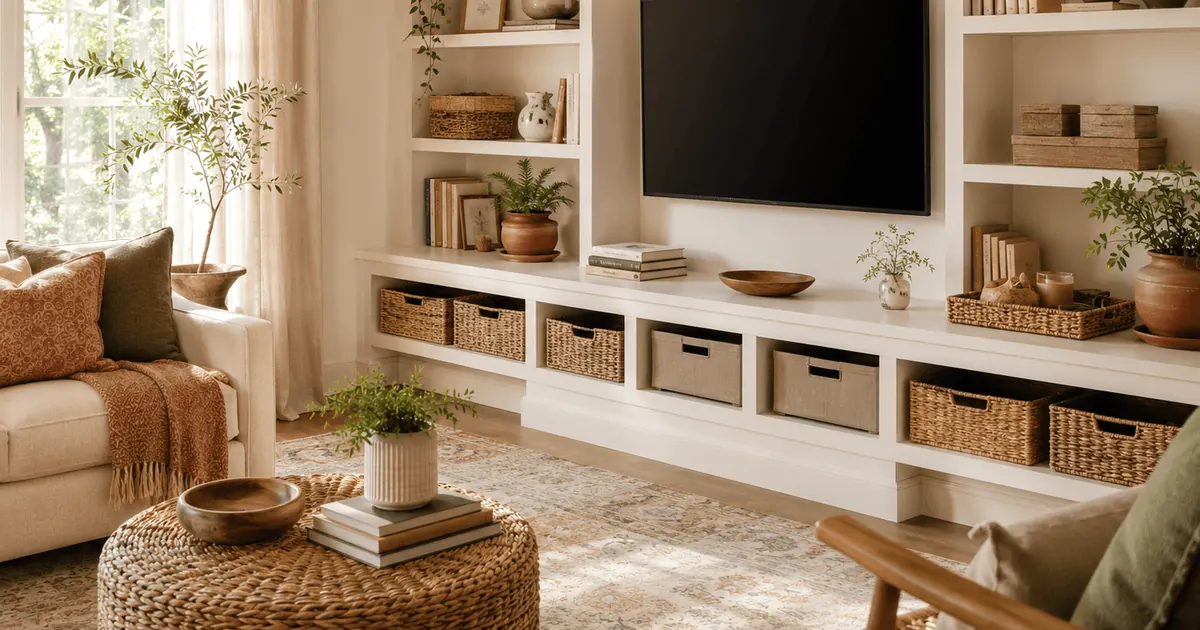
The critical difference between shelving that looks cluttered and shelving that looks intentional is containment: baskets, bins, and boxes on open shelves contain the visual noise of miscellaneous items. Use solid containers for irregular items, clear containers for items you need to see, and decorative baskets for fabric items. The shelf itself holds the container; the container holds the item.
Best configurations: One tall unit for folded clothing + accessories in bedroom; one mid-height unit in living room for books, media, and miscellaneous items; one narrow unit in entry for shoes and bags.
Compare Options
7. Storage Ottoman: Seating That Holds Belongings
A storage ottoman in the living room adds 15-25 liters of closed storage in a piece that serves as seating, coffee table, or footrest. For items that need to be accessible but out of sight -- extra blankets, remote controls, charging cables, seasonal accessories -- a storage ottoman is the most space-efficient option in a living room without a dedicated storage closet.
The cube ottoman format also doubles as a coffee table when paired with a tray on top. A set of two cube ottomans provides roughly 40 liters of combined storage and replaces a traditional coffee table entirely in small living rooms.
Compare Options
Kitchen Storage Without Pantry Space
8. Rolling Utility Cart: Mobile Storage That Goes Anywhere
A rolling utility cart in the kitchen adds 3-4 open shelves of storage that can be repositioned as needed and rolled out of the way when you need the floor space. In apartments with minimal cabinet space, a utility cart holds small appliances, pantry overflow, cleaning supplies, or a combination. The stainless steel version works in kitchens; a bamboo or wood version works as a bar cart or side table in living rooms.
The mobility is the key feature. Unlike fixed shelving, a rolling cart can move to wherever it is needed most -- next to the stove when cooking, against a wall when the kitchen is not in use, or into the living room when reconfiguring for guests.
Compare Options
9. Tension Rod Shelf Dividers in Cabinets
Most apartment kitchen cabinets are too tall for their contents -- a single row of plates leaves 12 inches of wasted vertical space above. Tension rod shelf systems, also called cabinet risers, install without drilling and double the usable layers inside existing cabinets. A set of four risers in a standard kitchen cabinet adds an estimated 40-60% more surface area for dishes, cups, and pantry items.
The tension rod version requires no tools and leaves no marks -- fully renter-safe. For deeper cabinets with items at the back that are hard to reach, a pull-out cabinet organizer on a sliding track solves the access problem without permanent installation.
Compare Options
Whole-Apartment Systems
10. Pegboard Freestanding Panel
A pegboard mounted to a freestanding frame rather than a wall works in any apartment without drilling. These systems stand on their own with a weighted base and can be moved between rooms. In a kitchen, a freestanding pegboard holds pots, utensils, and small items on hooks and shelves. In a home office or craft area, it holds tools, supplies, and equipment with fully customizable hook placement.
The freestanding design also makes it a room divider in studio apartments -- a pegboard panel between the sleeping and living area creates physical separation while adding functional storage on both sides.
Compare Options
11. Stackable Clear Bins: Modular Storage That Scales
Stackable clear bins are the most flexible storage solution in a closet-free apartment because they work in every room, stack to any height, and grow with your needs. The critical feature is a lid that locks the stack securely -- bins that simply rest on top of each other shift and topple. Look for bins with interlocking lids, a clear body so you can identify contents, and a consistent footprint so they stack uniformly.
Use bins to create pseudo-closet systems anywhere: a column of three stacked bins holds a category of items (off-season clothing, sports gear, craft supplies) with the same capacity as two dresser drawers and significantly more visibility. Add labels on the face of each bin for faster retrieval.
Compare Options
12. Hanging Fabric Shelf Organizer for Corners and Entries
A hanging fabric shelf organizer -- the kind that suspends from a tension rod or a freestanding rod -- creates a 5-6 shelf column of fabric cubbies in any corner or against any wall. In apartments with no entry closet, a hanging organizer near the front door gives each family member a dedicated cubby for bags, shoes, and accessories. In a bedroom, the same organizer in a corner holds folded clothes with a smaller footprint than a dresser.
The fabric versions are lightweight, washable, and do not require any wall attachment, making them the most renter-friendly option for creating vertical storage in a corner.
Compare Options
How to Build a Complete Storage System in a Closet-Free Apartment
Start With Your Highest-Volume Problem
Most closet-free apartment storage problems are primarily clothing storage problems. If you have nowhere to hang clothes, everything else is secondary. Start with a freestanding wardrobe or a clothing rack system sized for your full clothing volume before addressing any other category. Clothing storage solved first eliminates the largest and most visible clutter source.
Floor space is the scarcest resource in a small apartment. Before adding any storage furniture that takes up new floor area, check whether existing surfaces can go taller. A 36-inch bookshelf replaced with a 72-inch bookshelf doubles storage in the same footprint. A dresser with four drawers replaced with one that has six uses the same wall space with 50% more capacity. Always maximize height before expanding width.
Every Door Is a Storage Opportunity
Count the doors in your apartment. Each one is a potential storage surface -- 20 to 40 pockets of organized capacity -- that currently holds nothing. Over-door organizers on three doors in a two-bedroom apartment add more organized storage than a small closet, with zero floor footprint and zero wall damage.
Contain Everything on Open Surfaces
Open shelving works in closet-free apartments when items are contained in consistent, labeled bins, baskets, or boxes. Loose items on open shelves look like clutter even when organized. Contained items on open shelves look like a system. The container is doing the visual work -- invest in decent ones.
Frequently Asked Questions
Can you store a full wardrobe in an apartment with no closets?
Yes. A freestanding wardrobe plus a clothing rack handles a standard wardrobe volume equivalent to a small apartment closet. For larger wardrobes, add a storage bed with drawers for folded items and a set of under-bed containers for off-season clothing. Most apartment wardrobes fit comfortably across these three systems with better organization than a single shallow closet would provide.
What is the best storage solution for a studio apartment with no closet?
The three-piece combination that solves most studio storage problems: a clothing rack (visible, accessible, doubles as room decor), a storage ottoman or bench (seating plus hidden storage), and a tall open shelving unit along one wall (everything else). Each piece earns its floor space by doing double duty -- clothing rack is both storage and room element, ottoman is seating and storage, shelving is storage and room divider.
How do you store shoes in an apartment with no closet?
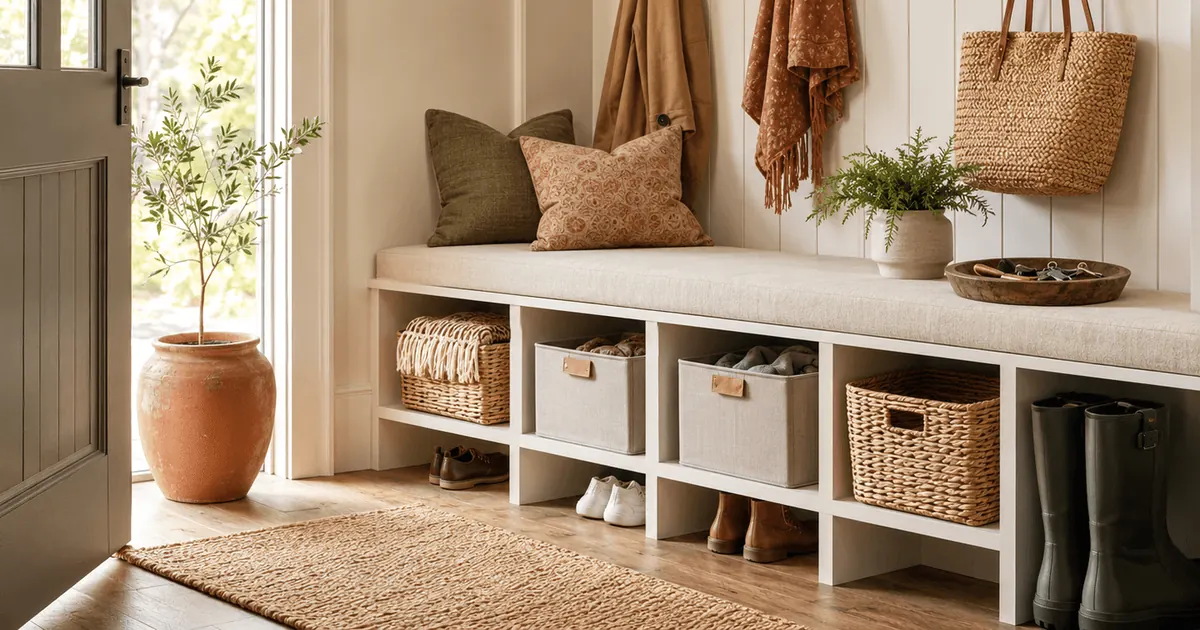
Over-door shoe organizers handle daily-rotation shoes (24-36 pairs on two doors) without floor space. A shoe bench at the entry stores 4-8 pairs in cubbies below and doubles as seating. Under-bed shoe boxes with clear lids store off-season or less-used shoes out of sight. For large shoe collections, a freestanding shoe rack tower holds 20-30 pairs in a footprint of about 12 x 20 inches.
What storage furniture works in apartments where you can't drill into walls?
All of the solutions in this guide are renter-safe -- freestanding wardrobes, clothing racks, storage beds, over-door organizers (hook-over, no drilling), tension rod shelf risers, freestanding pegboards, rolling carts, and open shelving all attach to nothing. The one partial exception is over-door organizers on very heavy doors with tight tolerances -- some doors don't accommodate standard hook bars. In those cases, a freestanding rack beside the door is the substitute.
How do you create a closet in a room with no closet?
The most effective built-looking closet alternative uses a corner of the room: place a tall shelving unit on one wall, a clothing rack on the adjacent wall, and add a tension rod across the corner if needed. Some renters add a curtain on a ceiling track (no drilling -- ceiling track systems use tension) to create a visual closet. The combination of hanging rod + shelf unit + drawer unit in a dedicated corner functions identically to a built-in closet at a fraction of the cost.
The Bottom Line
An apartment without closets is not a storage crisis -- it is a furniture and organization problem with specific solutions. A freestanding wardrobe handles clothing. A storage bed handles overflow. Over-door organizers handle the doors you already have. Vertical shelving handles everything else. None of these require drilling, none require owning the apartment, and all of them move with you when your lease ends.
The total investment for a complete closet-free apartment storage system -- wardrobe or rack, storage bed or under-bed containers, over-door organizers, and one tall shelving unit -- runs $200 to $500 depending on wardrobe choice. It is a one-time setup that permanently solves the storage problem and makes the apartment function better than most apartments with shallow, poorly designed built-in closets.