Pantry Organization

CleverHomeStorage is reader-supported. When you buy through links on our site, we may earn an affiliate commission at no extra cost to you.

Pantry Organization: The Complete Room Guide

A disorganized pantry costs you money and time. Duplicate purchases, forgotten food, expired goods, and chaotic meal prep are all symptoms of a pantry that has no system. This guide covers the full pantry top to bottom: zone-by-zone strategy, the best storage containers, shelf liner systems, pull-out solutions, and every deep-dive article we have published on pantry organization.

Quick Picks: Best Pantry Organization Products

ProductBest ForWhere to Buy
OXO Good Grips POP ContainersDry goods storage (flour, sugar, pasta)View on Amazon
Rubbermaid Brilliance Pantry SetMid-range airtight containersView on Amazon
Lazy Susan Turntable (12-inch)Canned goods and jarsView on Amazon
Stackable Can OrganizerCanned food rotationView on Amazon
Over-Door Pantry OrganizerDoor real estate recoveryView on Amazon
Pull-Out Pantry ShelfDeep cabinet accessView on Amazon

Zone-by-Zone Pantry Organization

Zone 1: Eye-Level Shelves

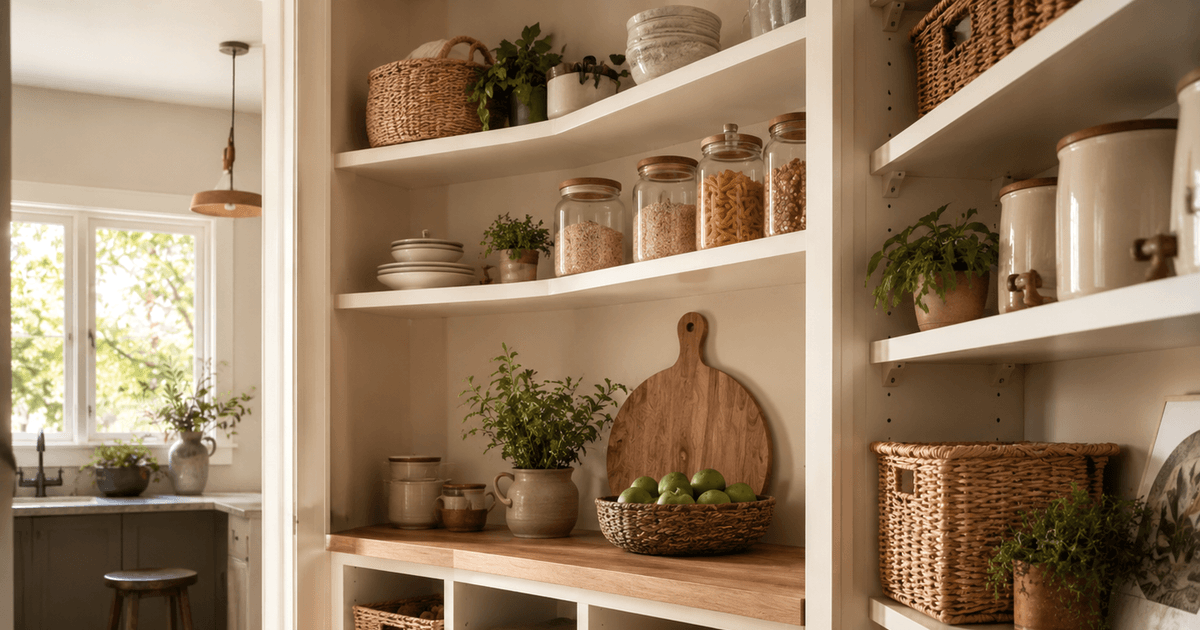
Eye-level shelves are the most valuable real estate in your pantry. Put what you use most here: your daily cooking ingredients, snacks, and items you need to grab quickly. Use clear airtight containers for dry goods so you can see fill levels without pulling anything out. Label containers on the front face, not the top, so labels are visible when shelves are at eye height.

Zone 2: Upper Shelves

Upper shelves are for bulk overflow, seasonal items, and backup supplies. If you buy a second box of pasta or an extra bag of rice, it goes up top. Use a step stool if your pantry is deep and upper shelves are hard to reach. Lazy Susans on upper shelves make corner spaces usable. Group backup supplies by category and do a quarterly rotation: pull older stock forward, push new stock to the back.

Zone 3: Lower Shelves

Lower shelves work well for heavy items: large containers, oil bottles, vinegar, bulk grains, and items that are too heavy to lift to upper shelves safely. Use pull-out drawer organizers at lower levels so you do not have to crouch and dig. Stackable can organizers let you use vertical space on lower shelves for canned goods while keeping FIFO rotation automatic.

Zone 4: The Pantry Door

Most pantry doors are wasted. An over-door organizer with adjustable shelves turns the door into a full storage wall. Use it for spices, packets, snack bars, condiment packets, and small items that get lost on main shelves. Measure your door clearance before buying, as some over-door units are too deep to clear the shelves when the door swings open.

Zone 5: Floor Space

Pantry floors are for large items only: a case of water, a bag of dog food, a bulk oil container, a wine rack. Do not stack random items on the floor. Floor clutter makes the entire pantry feel chaotic even when the shelves are organized. If you use the floor for a recycling bin or cleaning supply storage, keep it in a designated corner and do not let it expand.

Complete Pantry Organization Guide Index

Pantry Containers: What to Use for What

Not everything belongs in an airtight container. Here is a practical breakdown:

  • Flour, sugar, rice, pasta: Airtight containers are essential. These attract pests and go stale if stored in open bags.
  • Cereal and granola: Airtight containers extend shelf life significantly. Decant after opening.
  • Nuts and seeds: Airtight or refrigerate. High fat content makes them go rancid quickly in warm pantries.
  • Canned goods: Leave in cans. Use a can organizer for FIFO rotation. Label shelves by category.
  • Snack bars, packets, pouches: Use a bin or basket. Decanting adds no benefit and wastes container space.
  • Spices: Leave in original containers unless you are doing a full spice jar system with uniform jars. Spice drawer inserts or a door-mounted spice rack work well.

The Pantry Reset: Step-by-Step

  1. Full empty. Pull everything out. This is not optional. You cannot properly organize a pantry by shuffling things around.
  2. Purge expired and stale items. Check every expiration date. Toss anything past its date and anything that has been open for more than three months without being used.
  3. Group by category on your counter. Baking, pasta/grains, canned goods, snacks, breakfast, oils/vinegars, spices, backup stock. This tells you how many of each category you have before you put anything back.
  4. Wipe shelves and add liners. Non-slip shelf liners protect shelves and make cleaning spills easier.
  5. Install organizers. Lazy Susans, pull-outs, can organizers, door rack. Do this before restocking.
  6. Decant dry goods into containers. Label each container with contents and expiration date.
  7. Restock by zone. Eye-level for daily use, upper shelves for backup, lower for heavy items, door for small packets.
  8. Label shelf zones. Even sticky label tape works. It makes maintenance automatic.

Pantry Organization for Different Pantry Types

Walk-In Pantry

Walk-in pantries have enough room to use all four walls. Treat it like a small stockroom: heavy items low and close to the door, bulk backup high and back, daily-use items at arm reach on the main wall. Use a rolling cart for flexibility, and add a small step stool that stores flat against a wall.

Cabinet Pantry

Cabinet pantries are the most common and the hardest. The key is pull-out shelves: without them, anything in the back of a deep cabinet becomes invisible and forgotten. Even a simple two-shelf pull-out for a 24-inch cabinet makes a significant difference. Use door-mounted racks on the inside of the cabinet door to add an extra tier of accessible storage.

Reach-In Closet Pantry

Reach-in closet pantries work like walk-in pantries at smaller scale. Use the full height with adjustable shelving. Put adjustable wire shelving or solid wood shelves with adjustable brackets so you can customize spacing per category.

Frequently Asked Questions

What is the best way to organize a pantry?

Group by category, put daily-use items at eye level, use airtight containers for dry goods, and add a lazy Susan or pull-out shelf for deep spaces. The biggest mistake is organizing around the pantry’s existing layout instead of reassigning shelf heights to match your actual categories.

Are pantry organization containers worth it?

Yes for dry goods (flour, sugar, pasta, rice, cereal). They prevent pests, extend shelf life, and make quantities visible. Not worth it for canned goods, packaged snacks, or items you cycle through quickly. Start with a 10-piece airtight set for dry goods and see if it changes your habits before buying a 30-piece set.

How do I keep my pantry organized long-term?

One in, one out. When you buy a new container of something, move the existing open one to the front. Do a monthly five-minute check for items approaching expiration. Do a full pantry reset quarterly. The biggest maintenance failure is letting backup stock pile up without rotating it into active use.

What should I store in my pantry vs. the kitchen?

Pantry: dry goods, canned goods, snacks, backup stock, baking supplies, breakfast items, condiments that do not require refrigeration. Kitchen cabinets: items used at the stove or prep area every day (oils, salt, spices in active use). The pantry should hold quantity; the kitchen should hold access.