Best Toy Storage and Playroom Organization Ideas in 2026


CleverHomeStorage is reader-supported. When you buy through links on our site, we may earn an affiliate commission at no extra cost to you.

Toys multiply. It is one of the few universal laws of parenting. What starts as a modest basket of blocks becomes a sprawling empire of plush animals, action figures, art supplies, and tiny plastic pieces that find their way into couch cushions, shoe cubbies, and the darkest corners of every room. If your playroom or kid’s bedroom feels like it is staging a slow-motion takeover, better storage is the simplest fix.

We tested and researched dozens of toy organizers to find seven that actually work in real homes – not just in catalog photos. The picks below cover every category, from a classic bin organizer for toddlers to a LEGO-specific storage head for older builders. Each one was chosen for durability, ease of use (for kids, not just adults), and how well it handles the mess long-term.

Quick Comparison: Best Toy Storage Picks for 2026

ProductBest ForAge RangePrice Range
Humble Crew Extra-Large Toy Organizer (20 Bins)Overall toy organization2-6$$
ClosetMaid Cubeicals 6-Cube OrganizerFlexible, modular storageAll ages$$
Badger Basket Toy Box BenchDual-purpose seating and storage3-8$$
Handy Laundry Jumbo Toy HammockStuffed animals and soft toysAll ages$
Room Copenhagen LEGO Storage Head (Large)LEGO and small brick storage4-12$$
KidKraft Sling BookshelfBook display and reading nook2-7$$
WEKAPO Stuffed Animal Bean Bag Chair CoverPlush toy overflow3-10$

1. Humble Crew Extra-Large Toy Organizer with 20 Bins

The Humble Crew Extra-Large Toy Organizer is the workhorse of playroom storage. With 16 standard-size bins and 4 large bins across four tiers, it gives kids a visual map of where things go – and that is half the battle when you are trying to teach cleanup habits.

The angled shelves let even toddlers see what is inside each bin without pulling everything out. The bins are removable, which means you can carry a bin of blocks to the living room and bring it back when playtime is over. The frame is made from engineered wood with rounded edges, and it includes an anti-tip safety kit for wall anchoring.

Key features:

  • 20 removable plastic bins (16 standard, 4 large)
  • 4-tier angled shelf design for easy access
  • Dimensions: approximately 42″W x 11″D x 31″H
  • Anti-tip wall anchor hardware included
  • Available in multiple color combinations

Pros:

  • The sheer number of bins makes sorting by toy category simple
  • Low height is perfect for toddlers to reach independently
  • Bins slide out smoothly and are easy to clean
  • Sturdy construction holds up well to daily use

Cons:

  • Assembly takes 30-45 minutes and some steps can be fiddly
  • Plastic bins can crack if dropped on hard floors
  • The footprint is wide – measure your wall space first

2. ClosetMaid Cubeicals 6-Cube Storage Organizer

The ClosetMaid Cubeicals 6-Cube Organizer is the kind of furniture that grows with your family. Use it horizontally as a low toy shelf for a toddler, then flip it vertical when your child is older and needs more of a bookcase layout. Add fabric bins to some cubes for hidden storage, and leave others open for display items or frequently grabbed toys.

Each cube measures roughly 12 inches on all sides, which is the industry standard – so you are not locked into any one brand of fabric insert. The laminated wood finish wipes clean easily, and the overall construction is solid enough to serve as a room divider in larger playrooms.

Key features:

  • 6 open cubes (approximately 12″ x 12″ each)
  • Can be positioned vertically or horizontally
  • Compatible with standard fabric storage bins
  • Laminated wood finish in white
  • Hardware for wall mounting included

Pros:

  • Extremely versatile – works as a shelf, bench base, or room divider
  • Standard cube size means fabric bins from any brand fit
  • Clean, simple look that blends with adult furniture
  • Stackable with additional units for more storage

Cons:

  • Fabric bins sold separately
  • Laminate can chip if bumped hard during assembly
  • Not ideal for very heavy items like large hardcover book collections

3. Badger Basket Toy Box Bench

The Badger Basket Toy Box Bench handles two problems at once: where to put the toys and where to put the kid. The flip-top lid opens to reveal 4.5 cubic feet of storage – enough for a solid collection of dress-up clothes, stuffed animals, or board games. When closed, it doubles as a bench seat that supports up to 175 pounds.

The safety-hinged lid is the standout detail here. It stays open at any angle and closes slowly, which prevents the slammed-finger incidents that older toy chest designs were notorious for. The front panel has a ventilation slot that also works as a finger grip for opening.

Key features:

  • 4.5 cubic feet of interior storage
  • Safety-hinged lid with slow-close mechanism
  • Supports up to 175 lbs as a bench
  • Constructed from solid wood
  • Ventilation cutout on front panel

Pros:

  • Safety hinges are a genuine improvement over traditional toy chests
  • Strong enough for adults to sit on
  • Large interior swallows bulky items easily
  • Classic design fits bedrooms, playrooms, and living rooms

Cons:

  • No internal dividers – everything goes into one big space
  • Smaller toys tend to sink to the bottom and get buried
  • Heavier than most toy organizers, so it stays where you put it

4. Handy Laundry Jumbo Toy Hammock

The Handy Laundry Jumbo Toy Hammock is one of the simplest and cheapest ways to reclaim floor space in a playroom. It mounts in a corner using three hooks and expands to about 5.5 feet across, creating a mesh net that holds stuffed animals, soft dolls, and lightweight toys overhead and out of the way.

Installation takes about five minutes with a drill. The stretchy mesh material is durable enough to hold a generous pile of plush toys, and it keeps them visible so kids can actually find the one they want instead of digging through a bin. It is not designed for heavy or hard toys – this is strictly a soft-toy solution.

Key features:

  • Expands up to 5.5 feet along each wall
  • Stretchy mesh netting with reinforced edges
  • Includes mounting hooks and hardware
  • Lightweight and easy to take down for washing

Pros:

  • Uses otherwise wasted corner space near the ceiling
  • Very affordable – often under $10
  • Keeps stuffed animals visible and accessible
  • Simple installation with basic tools

Cons:

  • Only suitable for soft, lightweight toys
  • Hooks require drilling into the wall or ceiling
  • Younger kids may need help reaching toys stored up high
  • Can look cluttered if overstuffed

5. Room Copenhagen LEGO Storage Head (Large)

The Room Copenhagen LEGO Storage Head is an officially licensed container shaped like an oversized LEGO minifigure head. The large version holds about 500 bricks and measures roughly 9.5 x 9.5 x 10.7 inches. The top pops off to reveal an open interior – no small compartments or sorting trays, just a single cavity for dumping bricks into.

What makes this work is the psychology of it. Kids who might ignore a plain bin will happily toss LEGO pieces into a giant yellow head. They are also stackable, so you can line up several on a shelf and assign each one to a different color or set. It is not a full storage system on its own, but as a companion piece for a LEGO-heavy household, it earns its spot.

Key features:

  • Officially licensed LEGO product
  • Holds approximately 500 bricks
  • Dimensions: 9.5″ x 9.5″ x 10.7″
  • Stackable with other LEGO storage containers
  • Available in multiple expressions (winking, silly, happy)

Pros:

  • Kids are genuinely motivated to use it – it feels like part of the toy
  • Stackable design helps build a modular system
  • Durable, food-safe plastic is easy to wipe down
  • Makes a fun display piece even when not actively in use

Cons:

  • Limited capacity for serious LEGO collectors
  • No internal sorting compartments
  • Higher price per unit compared to generic containers
  • Only useful for small pieces – not for built sets

6. KidKraft Sling Bookshelf

The KidKraft Sling Bookshelf is designed around a simple insight: young kids choose books by the cover, not the spine. The four fabric sling shelves display books face-out, making it easy for toddlers and early readers to browse and pick their own stories. It holds a meaningful number of books – roughly 10 to 15 depending on thickness – without taking up much floor space.

The frame is solid wood, and the canvas sling shelves are reinforced to handle the weight of board books and hardcovers without sagging over time. At about 24 inches wide, it fits easily in a reading corner, beside a bed, or next to a play area. The natural wood and gray canvas colorway is understated enough to work in a living room if your playroom doubles as shared family space.

Key features:

  • 4 canvas sling shelves for face-out book display
  • Solid wood frame construction
  • Dimensions: approximately 24″W x 12″D x 28″H
  • Kid-height design for independent browsing
  • Natural wood with gray canvas finish

Pros:

  • Face-out display encourages kids to read independently
  • Compact footprint fits tight corners and small rooms
  • Solid wood frame is sturdy and long-lasting
  • Looks good in shared living spaces

Cons:

  • Limited total capacity compared to a traditional bookshelf
  • Canvas slings can stretch slightly with heavy loads over time
  • Not designed for oversized picture books or textbooks

7. WEKAPO Stuffed Animal Bean Bag Chair Cover

The WEKAPO Stuffed Animal Bean Bag Chair Cover solves the stuffed animal problem in the most practical way possible: it turns the pile into furniture. This is a large canvas cover with a zipper – you stuff it with plush toys, zip it shut, and it becomes a bean bag chair. No foam fill needed, no extra cost, and your kid’s stuffed animal collection is suddenly doing something useful.

The extra-large size (38 inches) comfortably holds around 90 to 100 stuffed animals of various sizes. The cotton canvas is thick and washable, and the zipper has a safety lock so younger kids cannot open it and unleash the contents. When your child outgrows the stuffed animal phase, you can repurpose the cover with blankets, pillows, or actual bean bag fill.

Key features:

  • 38-inch diameter extra-large cover
  • Holds approximately 90-100 stuffed animals
  • Premium cotton canvas material
  • Child-safe zipper with lock
  • Available in multiple colors and patterns

Pros:

  • Eliminates the need for a separate bean bag and storage bin
  • Washable cover is practical for daily use
  • Huge capacity for plush toys
  • Kids love sitting on something they helped fill

Cons:

  • Shape depends on what you stuff inside – can look lumpy
  • Need a large number of stuffed animals to fill it properly
  • Retrieving a specific toy means unzipping and digging
  • Cover only – no fill included (that is the point, but worth noting)

Age-Based Organization Tips

The best toy storage setup depends a lot on who is using it. A system that works for a two-year-old will frustrate a ten-year-old, and vice versa. Here is how to think about it by age group.

Toddlers (Ages 1-3)

At this stage, the goal is visibility and easy access. Toddlers cannot read labels, so they need to see their toys to know what is available. Open bins on low shelves work best – think the Humble Crew organizer or low cube storage. Color-coded bins help too. A red bin for blocks, a blue bin for cars, a green bin for animals. Keep the system simple and limit the number of categories. Five or six bins is plenty.

Rotate toys every few weeks. Put half the collection in a closet and swap them out. It keeps things fresh without buying anything new, and it cuts the cleanup load in half.

School-Age Kids (Ages 4-8)

This is when collections start: LEGO sets, art supplies, trading cards, science kits. Storage needs to get more specific. Cube organizers with labeled fabric bins work well because kids this age can read simple labels. A toy chest or bench handles the bigger items like dress-up clothes and sports gear.

Introduce the “one in, one out” rule early. When a new toy arrives, an old one gets donated. This is not about minimalism – it is about keeping storage manageable. Also, give kids ownership of the system. Let them choose which bins go where and what labels to use. They are far more likely to maintain a system they helped design.

Pre-Teens (Ages 9-12)

By this age, “toys” are shifting toward hobby supplies, books, tech accessories, and collectibles. The open-bin organizer from toddler years probably feels too babyish. Transition to closed storage – cube organizers with doors or drawers, shelving with baskets, or a combination of desk storage and display shelves.

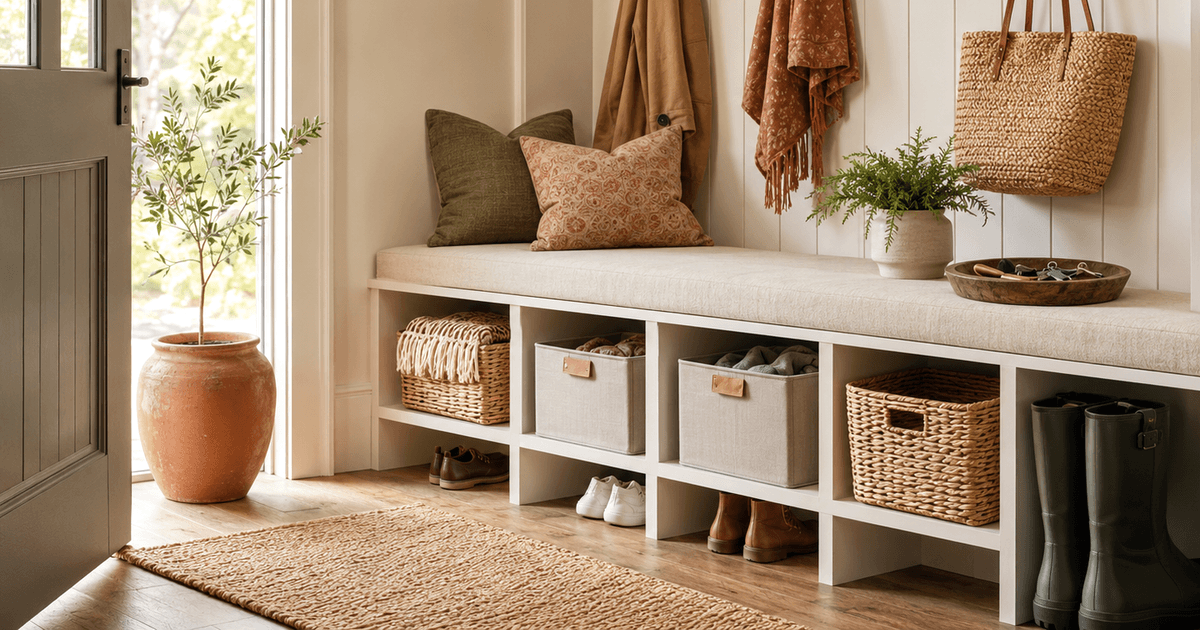
Pre-teens care about how their room looks. Give them storage options that feel more like furniture and less like a daycare setup. A cube organizer with neutral fabric bins, a storage bench at the foot of the bed, or wall-mounted shelving for displaying collections all work well. The key is making the storage feel intentional rather than imposed.

Tips for Keeping Toy Storage Organized Long-Term

Even the best organizers fail without a few habits to back them up. These are practical strategies that hold up over time.

  • Do a 10-minute nightly reset. Pick a time – right before bath or right after dinner – and make cleanup part of the routine. Ten minutes is enough if it happens daily. Thirty minutes once a week is not.
  • Label everything. For pre-readers, use picture labels. For readers, use words. Either way, labels remove the guesswork about where things go.
  • Keep a donation bin in the closet. When a toy loses its appeal, it goes straight into the bin instead of back into circulation. When the bin is full, donate it.
  • Store toys near where they get used. Art supplies near the table, outdoor toys near the door, building sets near the play area. The shorter the trip, the more likely things get put away.
  • Accept some mess. A playroom in active use is not going to look like a showroom. The goal is a system that makes cleanup possible, not a system that prevents play.

Frequently Asked Questions

How many toy storage bins does a playroom actually need?

It depends on the size of your collection, but most families find that 12 to 20 bins cover everything. Start with fewer bins and add more as needed. Having too many empty bins is not motivating – it just invites more clutter. A good starting point is one bin per major toy category: blocks, vehicles, dolls, art supplies, action figures, and a catch-all bin for miscellaneous items.

What is the safest toy chest design for young children?

Look for a toy chest with a safety-hinged lid that stays open on its own and closes slowly. This prevents the lid from slamming on small fingers. Ventilation holes are also important in case a child climbs inside. Avoid chests with latching lids that can trap a child. The Badger Basket bench listed above meets all of these safety criteria.

How do I organize toys in a small room with limited floor space?

Go vertical. Wall-mounted shelves, corner hammocks for stuffed animals, and over-the-door organizers all use space that is otherwise wasted. A cube organizer positioned vertically takes up less floor area than the same unit placed horizontally. Under-bed storage bins are another option if the bed is high enough. Focus on keeping the floor clear and moving storage upward.

At what age should kids start cleaning up their own toys?

Most children can start participating in cleanup around age two, with plenty of help and direction. By three or four, they can handle putting toys in the correct bins if the system is simple and labeled. By five or six, most kids can manage a basic cleanup routine independently. The key at every age is making the system easy enough that cleanup does not feel overwhelming. Fewer categories and visible storage make a big difference.

How often should I purge and reorganize toy storage?

A thorough sort-through twice a year works for most families – many people tie it to birthdays and the December holidays, since those are the times when new toys arrive in bulk. In between, keep a running donation bin so outgrown or broken toys leave the rotation steadily rather than piling up until the next big purge.

Related Guides

If you are working on organizing other areas of your home alongside the playroom, these guides cover storage solutions for common trouble spots.

See also: How to Organize a Kids Room: Step-by-Step Guide

1 thought on “Best Toy Storage and Playroom Organization Ideas in 2026”

Leave a Comment