How to Organize a Linen Closet: Step-by-Step Guide


CleverHomeStorage is reader-supported. When you buy through links on our site, we may earn an affiliate commission at no extra cost to you.

A linen closet should be one of the simplest storage spaces in your home. It holds a predictable set of items: sheets, towels, blankets, and a few extras. But without a system, those items pile up, topple over, and turn a small closet into a frustrating mess. You pull out one pillowcase and three washcloths fall on your head.

The good news is that a linen closet is one of the fastest organizing projects you can tackle. Most people can finish it in under two hours. This guide walks you through how to organize a linen closet from start to finish, with a clear zone system, practical product recommendations, and tips for keeping it organized long after the initial effort.

Related: Also see our guide to budget closet organizers for more solutions.

Before You Start: What You Need

Gather these supplies before you begin:

Step 1: Empty Everything Out

Pull every single item out of the closet. This is not optional. You cannot organize what you cannot see, and partial clean-outs lead to partial results.

As you remove items, give each shelf a quick wipe. Linen closets collect dust, lint, and the occasional dryer sheet that escaped months ago. A clean surface makes everything that goes back in look and feel better.

Step 2: Sort and Purge

Spread everything out and sort items into categories:

  • Sheets (flat, fitted, pillowcases, by bed size)
  • Towels (bath, hand, washcloths)
  • Blankets and throws
  • Seasonal bedding (comforters, quilts, duvet covers)
  • Bathroom supplies (toilet paper, soap, shampoo backstock)
  • Miscellaneous (heating pads, first-aid kits, cleaning rags)

Now purge. Be honest about what you actually use. A good rule: keep two sets of sheets per bed and two full towel sets per person in the household. Anything beyond that is surplus. Stained towels, scratchy sheets you never put on the bed, and that flat sheet from a set you lost the fitted sheet for years ago can all go.

Donate items in good condition. Old towels and sheets can often go to animal shelters, which always need them.

Step 3: Measure Your Closet

Before buying any organizers, measure the inside of your closet:

  • Width of each shelf
  • Depth of each shelf
  • Height between shelves (this determines whether bins will fit)
  • Door dimensions (for over-the-door organizers)

Write these numbers down or save them in your phone. Shelf spacing in linen closets varies widely, and a storage bin that is half an inch too tall will not work no matter how good the reviews are.

Step 4: Set Up Zones

The key to a linen closet that stays organized is assigning a specific zone to each category. Here is a practical zone layout that works for most standard linen closets:

What to Store Where: Linen Closet Zone Guide

ZoneLocationWhat Goes HereWhy
Everyday TowelsEye-level shelfBath towels, hand towels, washclothsMost frequently used items should be easiest to reach
Sheet SetsShelf above or below eye levelFitted sheets, flat sheets, pillowcases (grouped by bed size)Used regularly but less often than towels
Bathroom SuppliesLower shelf or binsToilet paper, soap, shampoo, cleaning suppliesHeavier items stay low for safety and easy access
Blankets and ThrowsUpper shelfExtra blankets, seasonal throwsUsed occasionally, lighter than they look
Seasonal and Bulky BeddingTop shelfComforters, duvet covers, guest beddingAccessed a few times a year at most
Small Items and ExtrasDoor or side pocketsFirst-aid supplies, heating pads, dryer sheetsKeeps small items visible and off the shelves

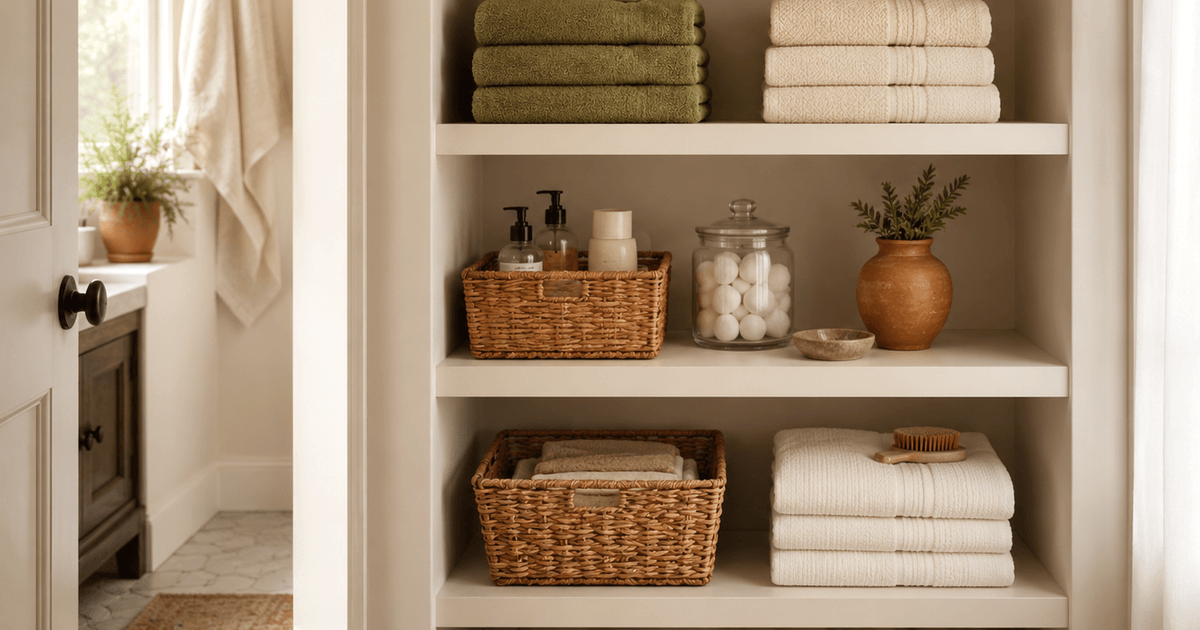
This layout puts your most-used items at arm’s reach and tucks rarely used or bulky items up high or in secondary spaces. Adjust the zones based on your household. If you have small children, you might move towels to a lower shelf so kids can grab their own.

Step 5: Fold and Store Strategically

How you fold matters almost as much as where you put things. A few folding methods that work well in linen closets:

  • Sheets: Fold each set together and tuck everything inside one of the matching pillowcases. This keeps sets together and makes the shelf look uniform.
  • Towels: Fold bath towels in thirds lengthwise, then in thirds again. Stack them with the folded edge facing out for a clean look. Or file-fold them (stand them upright like folders) inside a bin so you can see every towel at a glance.
  • Washcloths: Fold in quarters and stack or file them in a small bin.
  • Blankets: Fold to match the width of the shelf. Avoid overstuffing. If a blanket is too bulky, it belongs in a vacuum bag on the top shelf.

Step 6: Add Organizers and Dividers

This is where a few targeted products make a big difference. You do not need to buy everything at once. Start with the one or two items that address your biggest pain point.

Shelf Dividers

Lynk Professional Shelf Dividers (Set of 2) slide over standard wood shelves without tools or adhesive. They keep towel stacks from leaning into each other and prevent folded sheets from slowly spreading across the shelf. A simple fix that makes a visible difference on day one.

Fabric Storage Bins with Labels

DECOMOMO Storage Baskets (3-Pack) are a solid choice for grouping smaller items like washcloths, bathroom supplies, or guest linens. They come with paper tags so you can label each bin. The collapsible design means you can fold them flat if you stop needing one.

Over-the-Door Organizer

Homelux Theory 6-Tier Over-the-Door Organizer turns the back of your closet door into usable storage. Use the pockets for first-aid kits, dryer sheets, travel toiletries, or anything small that tends to get lost on shelves. The mesh side pockets add extra capacity without adding bulk.

Vacuum Storage Bags for Seasonal Bedding

HIBAG Vacuum Storage Bags (20-Pack) compress bulky comforters, duvets, and off-season blankets down to a fraction of their size. If your top shelf is crammed with bedding you only use a few months a year, these bags will free up significant space. They come in multiple sizes, so you can match the bag to the item.

Label Maker

Brother P-Touch PTD220 Label Maker is the go-to for home organization labeling. It prints clean, laminated labels that stick well and hold up over time. Label each shelf, bin, or zone so everyone in the household knows where things go and, more importantly, where they go back.

Step 7: Label Everything and Set Rules

Labels are the single most effective tool for maintaining an organized linen closet. They work for two reasons: they remind you where things belong, and they communicate the system to everyone else in the household.

Label each shelf or bin with its contents. Keep labels simple and specific:

  • “Queen Sheets” rather than just “Sheets”
  • “Bath Towels” rather than “Towels”
  • “Guest Bedding” rather than “Extra”

Then set a few household rules:

  • New clean items go on the bottom of the stack, so you rotate through your linens evenly.
  • Nothing gets shoved on top of a full shelf. If it does not fit, something needs to go.
  • Do a five-minute reset once a month. Straighten stacks, check that items are in the right zone, and toss anything that has worn out.

Common Mistakes to Avoid

Even with a solid plan, a few habits can undermine your linen closet organization:

  • Overstuffing shelves. If you have to shove items in or stack them to the point where they topple when you open the door, you have too much in the closet. Remove the least-used items and store them elsewhere.
  • Skipping the purge. Organizing without reducing inventory just rearranges the problem. Be willing to let go of linens you do not use.
  • Buying organizers before measuring. A beautiful set of matching bins does nothing if they are too wide for your shelves or too tall for the gap between them. Always measure first.
  • Mixing categories on one shelf. Storing towels, sheets, and bathroom supplies on the same shelf makes it harder to find what you need and harder to put things back. Each shelf should have one purpose.
  • Ignoring the door. The back of the closet door is free real estate. An over-the-door organizer can hold a surprising amount of small items that would otherwise clutter your shelves.

Tips for Small Linen Closets

If your linen closet is on the smaller side, these adjustments help:

  • Reduce inventory. Keep one set of sheets per bed instead of two. Store guest bedding in the guest room closet instead.
  • Use the door. An over-the-door organizer effectively adds another shelf or two of storage without taking up any closet space.
  • Go vertical. Shelf dividers let you stack items higher without the pile collapsing sideways. File-folding towels inside bins also uses vertical space more efficiently than flat stacking.
  • Vacuum-seal seasonal items. A king-size comforter that normally takes up an entire shelf can compress down to the size of a large book.
  • Move overflow elsewhere. Bathroom supplies can live under the bathroom sink. Extra blankets can go in a storage ottoman in the living room. The linen closet does not have to hold everything.

Maintenance: Keeping It Organized

An organized linen closet does not stay that way on its own. Build these habits to prevent backsliding:

  • Seasonal check (every 3 months): Swap seasonal bedding in and out. Inspect towels and sheets for wear. Donate or repurpose anything past its useful life.
  • Monthly reset (5 minutes): Straighten stacks, re-fold anything that has gotten messy, and make sure everything is in its zone.
  • One-in, one-out rule: When you buy new towels or sheets, remove the same number of old ones. This is the simplest way to prevent the closet from slowly overfilling again.

Frequently Asked Questions

How often should you replace towels and sheets?

Bath towels typically last two to three years with regular use before they lose absorbency and start to feel rough. Sheets last about two to three years as well, depending on fabric quality and how often they are washed. If a towel no longer dries you off properly or a sheet has thinning spots, it is time to replace it.

How many sets of sheets should you keep per bed?

Two sets per bed is the standard recommendation. One set is on the bed while the other is clean and stored. If you have a guest room that rarely gets used, one set is enough. Anything beyond two sets per bed is usually more than you need.

What is the best way to fold a fitted sheet?

Tuck each corner pocket into the one next to it so you end up with all four corners nested together. Lay the sheet flat, smooth out the elastic edge, and fold it into a rectangle. It will never look as crisp as a flat sheet, and that is fine. Tuck it inside a matching pillowcase with the rest of the set and the fold quality stops mattering.

Should you store linens in plastic bins or fabric bins?

Fabric bins are generally better for everyday linens because they allow airflow, which helps prevent musty smells. Plastic bins work well for long-term seasonal storage, especially when paired with vacuum bags, because they keep out dust and moisture. For most linen closets, fabric bins on the shelves and vacuum bags on the top shelf is a practical combination.

How do you keep a linen closet smelling fresh?

Place a small sachet of dried lavender, a bar of soap (still in its wrapper), or an open box of baking soda on one of the shelves. Avoid strong artificial fragrances, which can transfer to your linens. The most effective approach is simply making sure everything you put in the closet is fully dry. Damp towels or sheets are the number-one cause of musty closet odors.

Want the full picture? Start with our complete closet organization guide.

Leave a Comment