We research, compare, and evaluate every product we recommend, and only describe a pick as directly tested when that is specifically documented. As an Amazon Associate I earn from qualifying purchases. When you buy through our links we may earn a commission -- at no extra cost to you. Full disclosure.
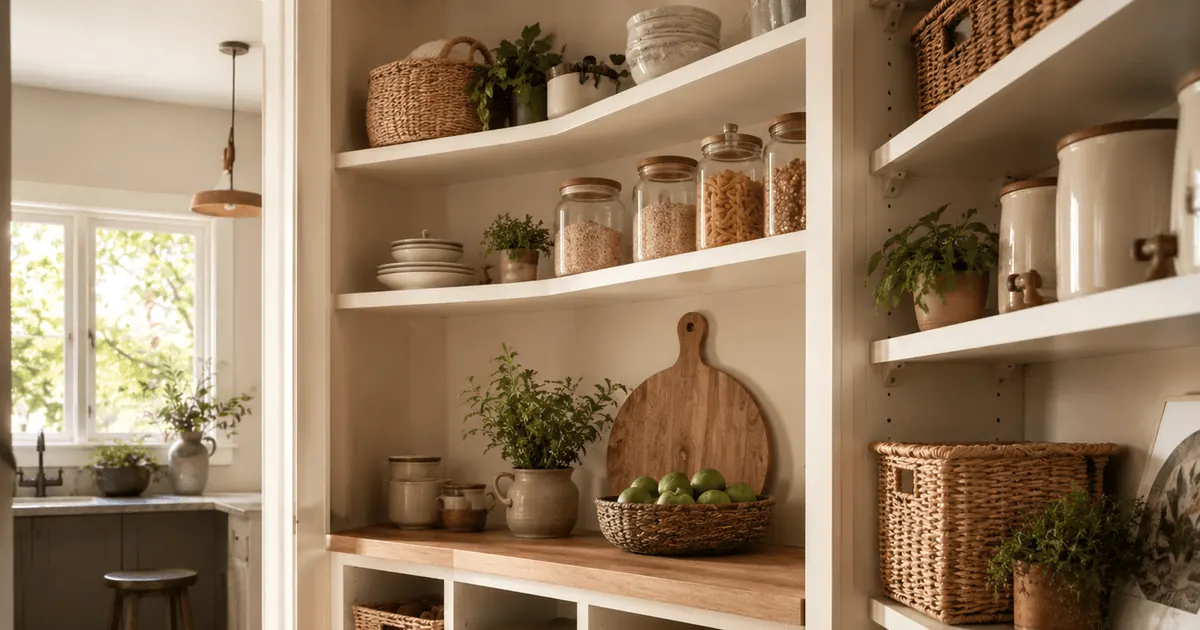
A pantry rarely gets messy because it is too small. It gets messy because everything in it is a different shape, height, and packaging, and there is no system telling each item where to live. Bags slump, cans stack into walls you cannot see behind, and the back of every deep shelf becomes a graveyard of duplicates you bought because you forgot you already had three. The fix is not a single magic product. It is a small kit of the right products working together.
This guide covers the eight pantry organization products that do the most work for the money, from airtight containers that tame dry goods to a door rack that turns dead space into real storage. Each pick explains what it is, why it works, and who it suits, so you can build the system your pantry actually needs rather than buying eight of one thing. Every pick is evaluated Research-Backed and Spec Checked against published specifications and aggregated owner feedback; we do not make first-hand product testing claims. Prices shift, so treat any figures as ranges and check current pricing at the link.
1. OXO Good Grips POP Airtight Containers - Best for Dry Goods
Airtight containers are the foundation of a pantry that stays organized, because they convert floppy bags and half-open boxes into uniform, stackable blocks. The OXO POP line is the most consistently recommended option in this category thanks to a push-button lid that seals with one hand and a square footprint that uses shelf space far better than round canisters.
Decant flour, sugar, rice, pasta, cereal, and coffee into POP containers and two things happen: contents stay fresh longer, and the shelf instantly looks calmer because every item is now the same clean shape. The clear walls let you see levels at a glance so you reorder before you run out. Start with the staples you use weekly rather than buying a giant set you will not fill.
Best for: Households that buy flour, sugar, pasta, cereal, and other dry staples and want them sealed, stackable, and visible.
Pros: One-hand push-button seal, square space-efficient shape, clear walls show levels, stack securely, easy to wash.
Cons: Higher cost per container than basic canisters; you need to commit to decanting.
2. Vtopmart Clear Plastic Pantry Bins (Set of 8) - Best for Grouping by Category
Not everything belongs in an airtight container. Snack packets, granola bars, seasoning packets, and odd-shaped items do best corralled into clear open bins so you can pull the whole category forward like a drawer. The Vtopmart clear bins are a value-priced set of eight that lets you zone an entire shelf in one purchase.
The clear plastic means you do not have to label every bin to know what is inside, and the open top makes grab-and-go easy for kids and adults. Group one category per bin, breakfast in one, snacks in another, baking in a third, and the pantry suddenly has rules. A set of eight is usually enough to organize a two or three shelf pantry.
Best for: Corralling snacks, packets, and loose items into pull-forward category bins on a budget.
Pros: Eight bins in one set, clear walls reduce labeling, open top for fast access, pull-forward design suits deep shelves.
Cons: Open tops collect dust over time; not sealed against pests.
Compare Options
3. BINO 2-Tier Lazy Susan Turntable Set - Best for Corners and Deep Shelves
The hardest spot in any pantry is the corner and the deep back shelf, where jars, oils, and condiments disappear and get bought twice. A turntable solves this by bringing the back to you with a spin. The BINO two-tier set adds a second level so you double the capacity of a single footprint while keeping everything reachable.
Use a turntable for oils, vinegars, sauces, spice jars, and baking extracts, anything tall and skinny that hides behind other tall and skinny things. The raised lip keeps bottles from sliding off, and the spin means no more excavating the back of the shelf. One on a lower shelf and one in a corner cabinet covers most kitchens.
Best for: Corners, deep shelves, and tall narrow items like oils, sauces, and jars that get lost in the back.
Pros: Two tiers double capacity, smooth spin reaches the back, raised lip prevents slides, works in cabinets too.
Cons: Round footprint leaves small gaps at the corners of a square shelf.
4. SONGMICS Bamboo Cabinet Shelf Risers (Set of 4) - Best for Reclaiming Vertical Space
Most pantry shelves are spaced taller than the items on them, which wastes six to twelve inches of air above every can and jar. A shelf riser creates a second platform in that dead zone so short items sit on two levels instead of one. The SONGMICS bamboo set of four lets you add a back row that you can actually see, the classic fix for the wall of hidden cans.
Risers are the cheapest way to nearly double usable shelf space without rebuilding the pantry. Put canned goods, spice jars, or short jars on them so the back row sits higher and stays visible. The bamboo finish looks warmer than wire or plastic if your pantry doubles as open shelving.
Best for: Shelves where short items waste tall vertical space and the back row disappears from view.
Pros: Set of four covers a full shelf, raises the back row into view, warm bamboo look, sturdy under canned goods.
Cons: Fixed height may not match every shelf; assembly required on some sets.
5. FIFO Can Tracker Food Rotation System - Best for Canned Goods
If your pantry runs on canned goods, a rotation rack is the upgrade that pays for itself in food you stop wasting. The FIFO can tracker loads cans from the top and dispenses the oldest from the bottom, so first in is first out and nothing expires forgotten in the back. It is a favorite of preparedness-minded households for exactly that reason.
Beyond reducing waste, a can rack reclaims the chaotic shelf where cans stack into unstable towers. Everything sits in clean angled rows, visible and labeled by the can itself. It suits anyone who keeps a stocked pantry of soups, beans, tomatoes, and vegetables and wants automatic rotation without thinking about it.
Best for: Households that stockpile canned goods and want automatic first-in-first-out rotation.
Pros: Automatic rotation reduces waste, cans stay visible in rows, stable angled design, adjustable for can sizes.
Cons: Takes a dedicated shelf; overkill if you keep only a few cans.
6. SimpleHouseware Over-the-Door Pantry Organizer Rack - Best for Dead Door Space
The back of the pantry door is the single most overlooked storage surface in the kitchen. An over-the-door rack turns that flat panel into five or six shallow shelves perfect for cans, spice jars, foil boxes, and snack packets. The SimpleHouseware rack hangs over a standard door or mounts to the wall, adding a full vertical column of storage without touching your existing shelves.
This is the highest-impact pick for a cramped pantry because it adds storage rather than just reorganizing what you have. Shallow shelves keep single rows of items visible, which is ideal for spices and cans that hide in deep shelving. If your pantry has a solid door, this is often the first product to buy.
Best for: Adding storage to a small pantry by using the back of the door for cans, spices, and packets.
Pros: Adds storage instead of just reshuffling, shallow shelves keep items visible, no-drill over-door option, frees main shelves.
Cons: Needs a solid door with clearance; heavy loads can stress hinges.
7. Rubbermaid Large Pantry Organizer Bin - Best Budget Bin to Standardize a Shelf
The underrated trick to a tidy-looking pantry is using one identical bin across a whole shelf, because matching bins stack squarely and line up cleanly. The Rubbermaid large pantry bin makes that affordable enough to buy six or eight without it feeling like an investment. It does the core job well: straight nesting walls, wide capacity, and a price that encourages consistency.
Reserve these for the workhorse zones, bulk snacks, baking supplies, or overflow, where you want a full category in one wide bin you can pull forward. Standardizing on a single model now means you can add to the system later without compatibility surprises between mismatched brands.
Best for: Outfitting a full pantry on a budget where consistency across many bins matters.
Pros: Low price per bin, straight walls stack cleanly, wide capacity, easy to standardize a whole shelf.
Cons: Fewer size options than premium lines; no lid for sealed storage.
8. Label Maker for Pantry Bins and Containers - Best for Keeping It Organized
Every product above organizes your pantry once. A label maker is what keeps it organized after the family starts using it. When each bin and container has a clear label, items go back where they belong without anyone guessing, which is the difference between a system that lasts a month and one that lasts a year.
A compact label maker pays off most in shared kitchens and pantries with kids, where the person who reorganized is not the only one putting things away. Label the bin, not just the container, so the category survives even when the contents rotate. It is the small final purchase that protects the money you spent on everything else.
Best for: Shared and family pantries where the system needs to survive everyone, not just the organizer.
Pros: Makes the system self-maintaining, clear labels for bins and containers, suits shared households, small and affordable.
Cons: An extra step some people skip; consumable tape adds minor ongoing cost.
How to Choose Pantry Organization Products: The Method
The biggest visual and practical win comes from containers and bins, because they convert mismatched packaging into uniform, stackable shapes. Buy airtight containers for dry staples and open bins for grouped categories first. Add turntables, risers, and racks afterward to solve the specific problem spots that remain.
Measure Before You Buy
The most common pantry mistake is buying products that do not fit the shelves. Measure shelf width, depth, and the vertical clearance between shelves before ordering. Risers and tall containers in particular fail when the shelf above sits too low, so check that clearance number first.
Solve Dead Space Before Buying More Shelves
Before assuming you need a bigger pantry, capture the space you already waste: the door, the air above short items, and the unreachable back of deep shelves. A door rack, shelf risers, and a turntable together often add more usable storage than a new shelf, for less money and no tools.
Standardize, Then Label
Pick one bin model per zone so everything stacks and lines up, then label each bin and container. Standardizing makes the pantry look intentional, and labeling makes the system survive daily use by the whole household.
Frequently Asked Questions
What pantry organization products should I buy first?
Start with airtight containers for your dry staples and a set of clear open bins to group snacks and packets by category. Those two products deliver the biggest improvement in both appearance and usability. Add a turntable, shelf risers, and a door rack afterward to fix specific problem spots.
Are airtight containers worth it for a pantry?
Yes for dry goods you use regularly, like flour, sugar, pasta, cereal, and coffee. They keep contents fresh, stop bags from slumping, and make the shelf uniform and stackable. They are less necessary for items in their own sturdy packaging that you finish quickly.
How do I keep a deep pantry shelf usable?
Combine a turntable for tall narrow items, shelf risers to raise the back row into view, and pull-forward bins so you can grab a whole category like a drawer. The goal is to never have a hidden back row, which is where duplicates and expired food accumulate.
What is the cheapest way to organize a pantry?
Standardize on one affordable bin model across each shelf, add shelf risers to reclaim vertical space, and hang an over-the-door rack to add storage without buying shelving. That trio costs little, requires no tools, and fixes the three most common pantry problems.
The Bottom Line
The best pantry is built from a small kit, not one hero product. Decant dry staples into airtight OXO POP containers, group everything else into clear Vtopmart bins, and standardize the workhorse zones with budget Rubbermaid bins. Then fix the problem spots: a BINO turntable for corners, SONGMICS risers for wasted vertical space, a FIFO rack for canned goods, and a SimpleHouseware door rack to add storage you did not know you had. Finish with a label maker so the whole thing survives daily use.
For deeper dives on the individual pieces, see our guides on the best pantry storage containers, the best kitchen pantry organization system, the best pantry can organizers, the best lazy susan organizers, the best shelf risers and cabinet organizers, and our roundup of the best stackable storage bins.