We research, compare, and evaluate every product we recommend, and only describe a pick as directly tested when that is specifically documented. As an Amazon Associate I earn from qualifying purchases. When you buy through our links we may earn a commission -- at no extra cost to you. Full disclosure.
Quick answer: The best pantry organization system is a measured five-zone layout, not a matching set of bins. Put daily dry goods at eye level, cans and heavy items low, snacks within reach, backup stock high or deep, and lightweight packets on a compatible door. Then buy only the organizer that fixes each zone's specific access problem.
If you are starting from scratch, do not order the complete product list. Measure the pantry, map the food already in it, and start with the one zone that causes the most waste or frustration.
Best Pantry System at a Glance
| Pantry problem | System move | Exact pick | Check before buying |
|---|
| Open bags and mismatched dry goods | Create a daily-staples zone | OXO POP or Rubbermaid Brilliance set | Shelf height and the food quantities you normally buy |
| Cans hidden behind one another | Build a low canned-goods zone | Simple Houseware 3-tier rack | Rack footprint, vertical clearance, can diameter, and loaded shelf capacity |
| Food disappears on deep shelves | Add pull-forward access | Mustorn 2-pack sliding drawers | Cabinet opening, hinges, depth, mounting surface, and intended load |
| Bottles get lost in corners | Use one rotating category | Copco 12-inch turntable | Full rotation diameter and bottle height |
| Packets and snacks crowd shelves | Use lightweight door storage | Simple Houseware clear pocket organizers | Door width, thickness, closing clearance, and hinge movement |
The 5-Zone Pantry Organization System
Zone 1: Daily Staples at Eye Level
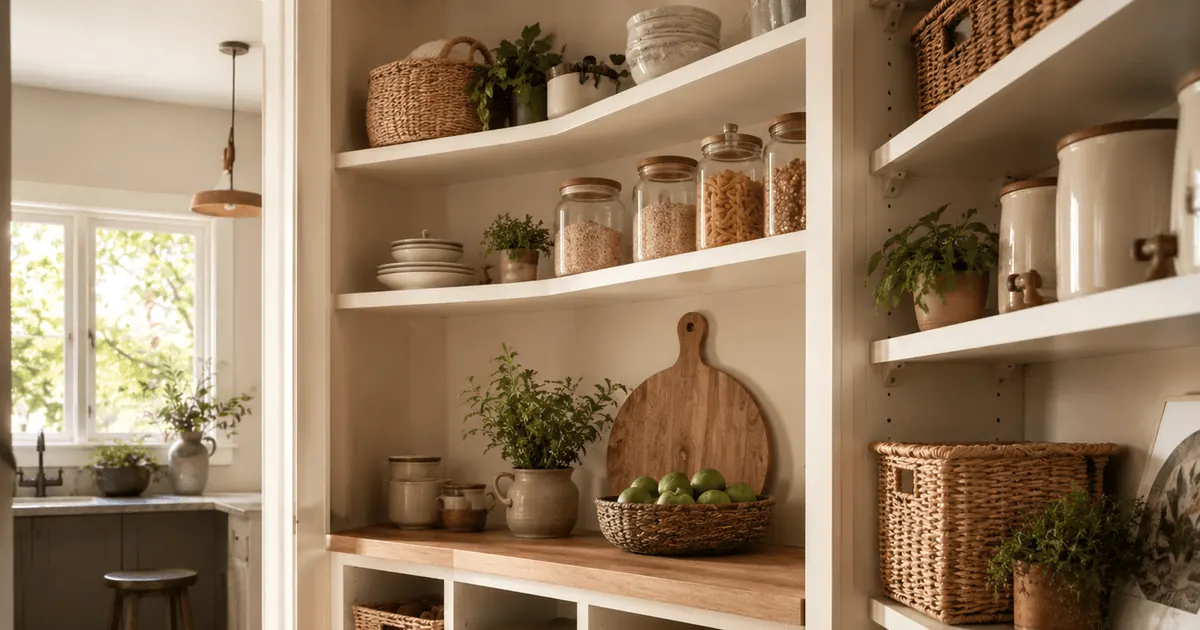
Reserve the easiest shelf for ingredients used several times a week. This may include flour, sugar, rice, pasta, cereal, coffee, or baking staples. Containers help when they replace floppy or hard-to-seal packaging, but decanting every snack and short-lived item creates unnecessary work.
Best fit: Check Price for a push-button modular format, or the Check Price for a clear latch-lid format.
Compare the exact container capacities with the package sizes you buy. A container that holds less than one full bag creates leftover packaging and defeats the system.
Zone 2: Cans and Heavy Items Low
Put cans, large jars, drinks, and other heavy stock on a lower shelf that can support the loaded arrangement. A tiered rack improves visibility, but the headline capacity only applies when the cans fit the rack's lanes and clear the shelf above.
Check Price. The current listing identifies a 36-can configuration, adjustable dividers, and an 11.5-inch-deep by 17-inch-wide by 13.75-inch-high footprint. Measure the intended cans and the loaded shelf before ordering.
Zone 3: Snacks and Grab-and-Go Categories
Group snacks by behavior rather than by package shape. Breakfast bars, school snacks, lunch add-ons, and adult grab-and-go items can each have one visible category. Keep the categories broad enough that everyone can restock them without debating where an item belongs.
Open bins work well when their full exterior dimensions fit the shelf and their handles remain reachable. For exact container-set comparisons, see the seven current pantry storage sets. Avoid buying a generic "pantry bin" from a search results page without confirming the exact pack count and dimensions.
Zone 4: Deep Shelves and Backup Stock
Deep shelves need movement, not more rows. Use a pull-out organizer for light categories or a handled bin that can be removed as one unit. Keep backup stock behind or above the active item only when it remains visible and easy to count.
Check Price. The listed format uses peel-and-stick mounting and measures 16.5 inches deep, 11.8 inches wide, and 3.94 inches high per drawer. Confirm the interior opening, hinge clearance, surface preparation, and current load instructions. For permanent and wider options, compare the four exact pantry pull-out shelves.
Zone 5: Corners and Door Storage
Use a turntable where bottles disappear in a corner or behind one another. A single-level design keeps tall items visible, but it needs enough clear diameter to rotate without hitting the wall or neighboring products.
Check Price.
A compatible door can hold lightweight packets or small snack categories. The Check Price uses 15 pockets per organizer. It is a pocket organizer, not a rigid shelf rack. Check door thickness, closing clearance, and the current mounting instructions, and do not load it like a fixed pantry shelf.
What to Buy First
- If food expires unseen: Fix deep-shelf access with one pull-out drawer, handled bin, or turntable.
- If bags spill or will not reseal: Add containers only for the dry staples bought repeatedly.
- If cans form hidden rows: Measure for a tiered rack and verify each common can size.
- If snacks spread across every shelf: Create two to four broad, labeled grab-and-go categories.
- If the shelves are full but the door is empty: Confirm the door can close with a lightweight pocket organizer installed.
Pantry Measuring Checklist
- Usable shelf width, not wall-to-wall width
- Usable depth with the door fully closed
- Vertical clearance at the front and back of each shelf
- Door swing, hinges, trim, handles, and shelves that project into the opening
- The diameter and height of cans, bottles, and jars used most often
- The package volume of dry goods before choosing container capacities
- The intended loaded weight and the shelf or mounting-surface instructions
Write the measurements in your phone before shopping. Product photos are not scaled to your pantry, and an organizer's exterior dimensions matter more than its category name.
Common Pantry-System Mistakes
Buying a full matching set before measuring
A large set can create new wasted space when tall containers do not clear shelves or the smallest pieces do not match the foods you buy. Start with one zone and expand only after it works.
Using fixed prices or star ratings to choose
Amazon prices, sellers, availability, and review averages change. Compare the current exact product, dimensions, included pieces, and return terms at checkout rather than relying on an old screenshot or article rating.
Overloading an organizer or pantry door
A pocket organizer, adhesive drawer, wire rack, and permanent rollout do not have the same mounting or load requirements. Follow the current instructions for the exact product and mounting surface.
Creating too many categories
A pantry system fails when putting groceries away requires too many decisions. Use a few functional categories, leave room for normal inventory changes, and label only what another household member might misplace.
Frequently Asked Questions
What is the best pantry organization system for a small pantry?
Use fewer, broader zones and prioritize access. One daily-staples shelf, one snack bin, one low heavy-item area, and one rotating or pull-out organizer usually help more than many small containers. Add door storage only after confirming closing clearance.
Should everything be removed from its original packaging?
No. Decant foods that are regularly purchased, difficult to reseal, and clearly identified after transfer. Keep original packaging when it carries preparation, expiration, allergen, nutrition, or lot information you need.
Are pull-out organizers safe for heavy pantry items?
Only when the exact organizer, mounting method, cabinet surface, and stated load guidance support the intended items. A peel-and-stick drawer for light packets is not equivalent to a screw-mounted cabinet rollout.
How do I keep the pantry organized after setup?
Give each grocery category one obvious destination, leave some open capacity, and reset misplaced items before each major grocery trip. If one category repeatedly overflows, change the zone size instead of buying another miscellaneous bin.
The Bottom Line
Measure first, map five practical zones, and buy only the organizer that solves each zone's access problem. The OXO and Rubbermaid sets serve dry goods, the Simple Houseware rack organizes compatible cans, the Mustorn drawers pull light categories forward, the Copco turntable opens up corners, and the Simple Houseware pockets use a compatible door. A smaller system that fits the pantry and the household will outperform a showroom-style collection that is difficult to maintain.