A child's bedroom transformed by strategic toy storage is more than just tidy--it's a space that supports playtime creativity, makes cleanup manageable for kids, and gives parents back sanity. If you're staring at a room overflowing with action figures, building blocks, stuffed animals, and plastic everything, you're not alone. The challenge of toy storage in kids rooms is one of the most common home organization struggles families face.
Kids room toy storage solutions range from simple bins and shelves to more sophisticated systems designed specifically for toys. The right approach depends on your child's age, the types of toys you have, how much space is available, and how involved your child is willing to be in cleanup routines. This guide breaks down practical strategies, system types, and implementation tips that help transform chaotic toy rooms into functional, child-friendly spaces.
Understanding Your Storage Needs Before You Start
Before investing in any storage solution, take time to honestly assess what you're actually storing. Walk through your child's room and categorize the toys. You'll likely find building sets, action figures, plush toys, play kitchen items, vehicles, games, and puzzles. Each category might have different storage requirements.
Toys vary dramatically in size, frequency of use, and how they should be organized for your child to actually find and use them. Small pieces require containers with secure lids. Items your child plays with daily should be easily accessible, while seasonal toys or items they've outgrown can go higher up or in less convenient spots. This assessment phase prevents buying storage solutions that don't match your actual inventory.
Consider also the developmental stage of your child. Toddlers and preschoolers benefit from lower storage they can access independently, while school-age children can manage higher shelves and more complex organization systems. Teenagers might prefer consolidated storage that looks less "toy-oriented" and more grown-up.
Open Shelving: Accessible and Visually Clear
Open shelving is one of the most effective toy storage approaches for kids rooms because it makes toys visible and accessible without requiring children to dig through closed bins. When toys are visible, children are more likely to remember what they have and use them, and it's immediately obvious when something is missing or broken.
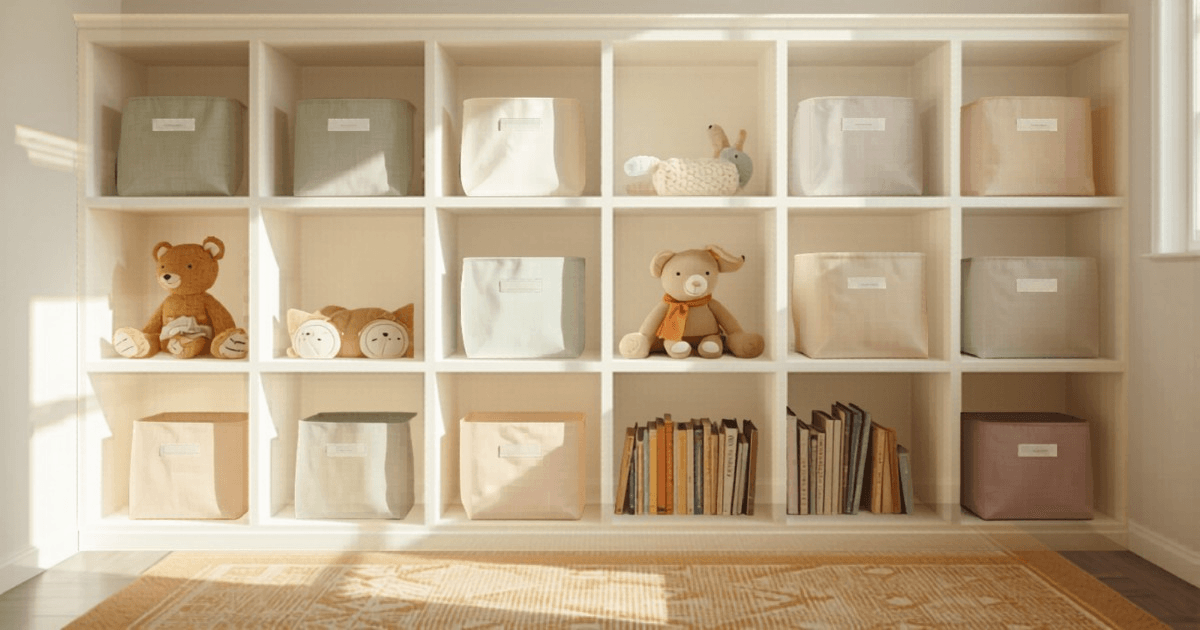
Cube shelving units are particularly popular for toy storage. These modular systems allow flexible arrangement--you can remove shelves, adjust shelf heights, or repurpose individual cubes as the collection grows or changes. Open cubbies naturally encourage sorting: vehicles in one cube, building blocks in another, stuffed animals in a third. This visual separation helps children understand the system and makes cleanup simpler.
The downside of open shelving is that it requires regular maintenance. Toy accumulation becomes immediately obvious, and dust settles on exposed items. However, this visibility is actually valuable--it makes it harder to ignore overflowing collections and naturally prompts conversations about which toys your child actually plays with versus which are just taking up space.
When arranging open shelving, place heavier items on lower shelves for both safety and accessibility. Use vertical space efficiently by stacking similar items, but don't create situations where your child would need to remove everything to get one toy. Add small baskets or bins within some cubes to group tiny items together, preventing small pieces from scattered across the shelf.
Closed Storage Bins: Hidden Organization
When your goal is clean aesthetics and containing visual clutter, closed storage bins become essential. Plastic storage containers with secure lids work well for toys because they're durable, easy to clean, and come in numerous sizes.
The critical element with closed bins is labeling. Without clear labels--using pictures for pre-readers, words for readers, or both--bins become mystery boxes where toys get lost and forgotten. When children can't easily see contents, they either don't know what to get or won't bother putting things back properly. Quality labels visible from multiple angles solve this problem.
Size selection matters significantly. Containers that are too large become difficult for children to manage and encourage pile-everything-in-here behavior. Containers that are too small require too many bins, defeating the purpose of consolidation. Medium-sized bins generally work well--large enough to hold meaningful quantities but small enough that children can lift and carry them.
Rotating storage is a valuable principle. Not every toy needs to be accessible every day. Keep current favorites accessible and rotate others into closet storage, under-bed storage, or a separate storage area. This reduces clutter while keeping the collection available, and children often find "new" excitement in rotated toys.
Under-Bed Storage: Using Hidden Space
The space under a child's bed is often overlooked real estate that can dramatically expand storage capacity. Rolling storage containers fit perfectly in this space and allow items to be easily accessed without moving furniture or deep climbing.
Under-bed storage works best for items that don't need frequent access: seasonal toys, items your child is growing into, collections they enjoy but don't play with daily, or consolidated toy rotation bins. Because access requires some effort--bending down, pulling out containers--this space naturally discourages the "I'll just grab this constantly" habits.
Flat, wide storage containers maximize the under-bed space better than tall containers. Measure the clearance under your child's bed before purchasing, as many platform beds or low-profile frames offer limited height. Containers with wheels make retrieval much easier, which is important for maintaining usability over time.
One advantage of under-bed storage is visibility reduction--closed containers out of daily sight automatically reduce visual clutter without requiring children to manage open shelving organization.
Toy-Specific Storage Solutions
Certain toys require specialized storage approaches. Building block systems work best in dedicated bins or containers that let children dump and sort quickly. Many families create separate containers for different block types--LEGO in one, Duplos in another, wooden blocks in a third.
Stuffed animals present a unique challenge because children often develop strong attachments while the collection can grow exponentially. Bean bag chair covers made from mesh allow children to stuff animals inside while keeping them contained and visible. Hammocks or hanging nets in corners use vertical space without taking up floor or furniture space.
Art supplies, if stored in the toy room, benefit from drawer units or tiered containers that keep different media separated. Doll houses or play kitchens should have dedicated storage for their accessories--without organized homes for dishes, food, and accessories, these items scatter throughout the room.
Games and puzzles work best in stackable storage on shelves where the whole stack is visible, making selection easier. Avoid burying board games under other items where they become forgotten.
Vertical Storage: Maximizing Limited Space
In smaller children's rooms, vertical storage becomes essential. Wall-mounted shelves, pegboards, hanging organizers, and wall pockets all draw the eye upward and preserve floor space that might otherwise be consumed by storage furniture.
Pegboards with hooks and baskets offer highly customizable storage where the arrangement can change as your child's toy collection and interests evolve. Wall pockets or hanging organizers store smaller items efficiently. Magnetic storage solutions attach to metal surfaces, storing cars or metal pieces while taking minimal space.
Tall, narrow shelving units that reach toward the ceiling maximize storage without consuming much floor area. With proper anchoring for safety, these units can store a substantial collection while leaving room for play space.
The trade-off with vertical storage is accessibility--higher items are less accessible to younger children. Design your vertical storage with daily-use items at reachable heights and less-frequently-used items higher up.
Creating Systems That Your Child Will Maintain
The best toy storage solution ultimately fails if your child doesn't participate in maintaining it. Storage systems that are too complicated, require too much decision-making, or are simply uninviting won't be used consistently.
Children are more likely to maintain systems they helped design. Involving your child in planning--choosing bin colors, deciding what goes where, creating labels--increases buy-in. Even young children can participate meaningfully in these decisions.
Make cleanup realistic and rewarding. If cleanup takes twenty minutes and requires removing items from seven different bins, your child will resist. If cleanup means dropping toys into one or two accessible bins, it feels manageable. Chunk the system into reasonable units that match cleanup time horizons your child can actually manage.
Establish routines around cleanup--specific times daily when toys get organized, rather than treating it as an overwhelming Saturday chore. Smaller, more frequent organization feels less burdensome than rare, massive cleanups.
Adapting Storage as Your Child Grows
The right toy storage system today may not work in three years. As children age, toy types change, interests shift, and the whole room's purpose might transform. Plan for flexibility rather than investing in permanent, inflexible systems.
Cube shelving, while an upfront investment, adapts beautifully as children grow. Cubes that held toy cars and action figures can hold books and personal items for a teenager. Modular systems let you remove, add, or reconfigure components without complete replacement.
Regularly reassess whether the current system still serves your child's actual collection and behaviors. What worked for a six-year-old might not work for an eight-year-old with different toys and interests. Growth is a good prompt for system evaluation.
Conclusion: Building Functional Toy Storage for Kids Rooms
Effective kids room toy storage solutions blend accessibility, visibility, and maintainability into systems that serve the whole family. Whether you choose open shelving for daily visibility, closed bins for aesthetic cleanliness, vertical storage for space efficiency, or a combination approach, the best system aligns with your space constraints, your child's developmental stage, and your family's willingness to maintain it.
Start by honestly assessing your toy inventory and storage space. Involve your child in designing the system. Prioritize solutions that make cleanup realistic and achievable. Remember that the perfect kids room toy storage system is one that actually gets used, which means it must be child-friendly enough that your child will maintain it with minimal constant reminding.
By thoughtfully implementing these strategies, you'll create a room that supports both playtime creativity and organized functionality--a space where toys remain accessible, cleanup feels manageable, and you're no longer tripping over plastic over every corner.