We research, compare, and evaluate every product we recommend, and only describe a pick as directly tested when that is specifically documented. As an Amazon Associate I earn from qualifying purchases. When you buy through our links we may earn a commission -- at no extra cost to you. Full disclosure.
The entryway is where the whole house gets its first impression and where the daily clutter lands first. Shoes pile by the door, coats drape over chairs, keys vanish, and mail breeds on the nearest flat surface. The problem is that most entries, especially in apartments, have no closet and very little floor space, so the storage has to go vertical, fold into furniture, or live on the wall.
This guide covers the eight best entryway storage solutions for 2026, from an all-in-one hall tree to renter-safe hooks and over-the-door organizers, sized for everything from a roomy foyer to a narrow apartment landing. Each pick explains what it is, why it works, and who it suits. Every pick is evaluated Research-Backed and Spec Checked against published specifications and aggregated owner feedback; we do not make first-hand product testing claims. Pricing moves, so treat figures as ranges and confirm at the link.
1. VASAGLE Hall Tree with Bench and Hooks - Best All-in-One
A hall tree combines the three things an entryway needs, a seat, hooks, and a shelf, into one piece of furniture, which is why it is the most efficient single purchase for an entry with a bit of wall space. The VASAGLE hall tree gives you a bench to sit on while you put on shoes, hooks above for coats and bags, and a shelf or cubby for daily items, all in one footprint.
This is the pick that creates an instant mudroom where there was none. It anchors the entry visually and functionally so coats, bags, and shoes each have a home the moment you walk in. It suits entries with a clear stretch of wall and is the fastest way to go from chaos to a real drop zone.
Best for: Entries with wall space that need seating, hooks, and a shelf in one piece.
Pros: Combines bench, hooks, and shelf, creates an instant mudroom, anchors the space, one purchase does it all.
Cons: Needs a clear wall stretch; assembly required and heavier to move.
2. Storage Bench with Lift-Up or Cubby Seat - Best for Hidden Storage
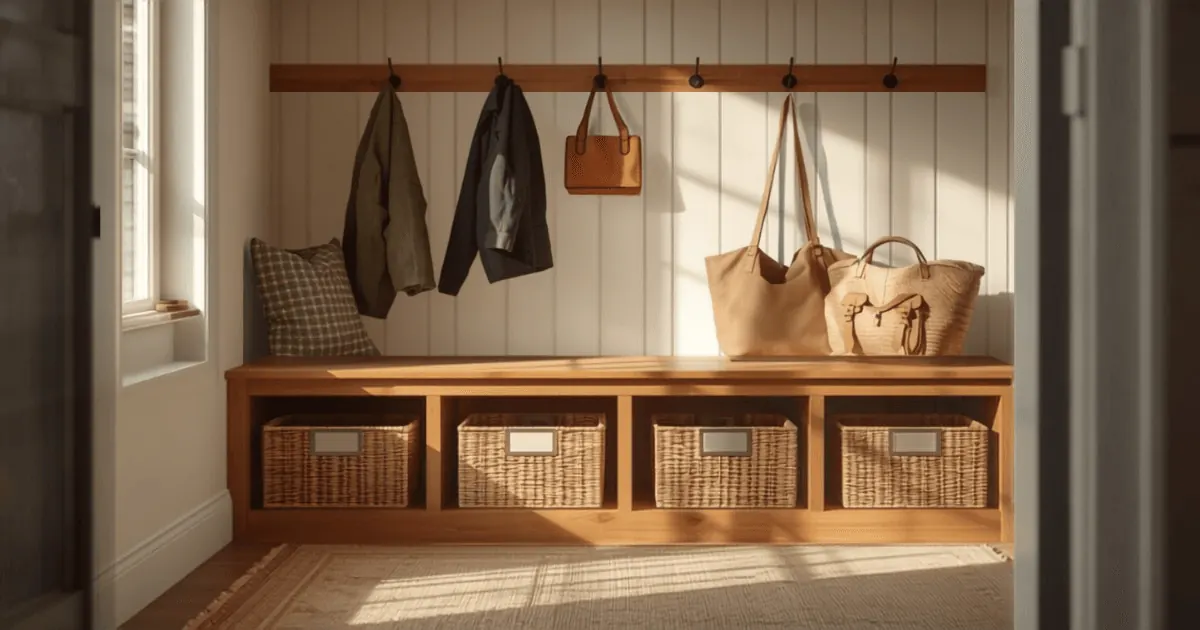
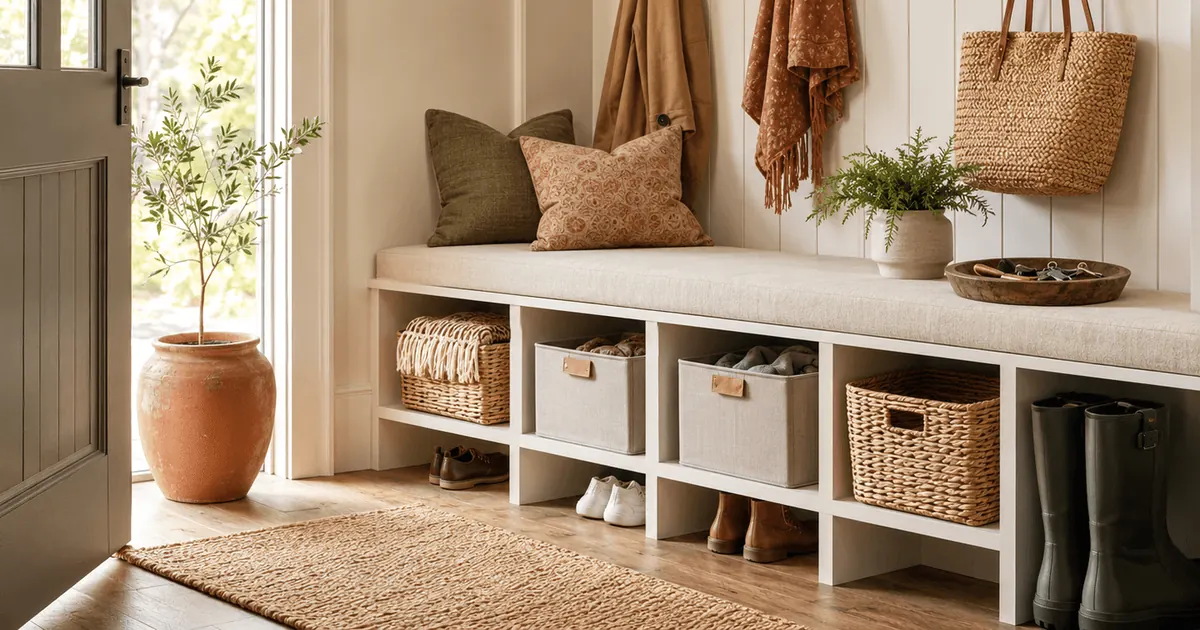
A storage bench solves two problems at once: it gives you a place to sit while dealing with shoes, and it hides the shoes and gear inside or beneath the seat. Lift-up lid benches swallow bulky items out of sight, while cubby-style benches keep shoes in open slots so they air out and stay grabbable.
This is the right pick when you want the entry to look clean rather than display everything on hooks. Put off-season or overflow items in a lift-up bench and daily shoes in a cubby bench. It works as a standalone seat under a window or paired with hooks above to build a custom drop zone.
Best for: Entries that need seating plus hidden or cubbied shoe and gear storage.
Pros: Seat plus storage in one, hides clutter or cubbies shoes, pairs with wall hooks, suits a clean look.
Cons: Lift-up lids bury daily items; cubbies show shoes on display.
Compare Options
3. Wall-Mounted Coat Hook Rack - Best for No-Closet Entries
When there is no closet, the wall becomes the closet, and a sturdy mounted hook rack is the highest-value way to use it. A row of strong hooks holds coats, bags, hats, and umbrellas off the floor and out of the pile, turning bare wall into vertical storage that costs little and installs in minutes.
Hooks are the foundation of nearly every entryway system because they are cheap, compact, and endlessly useful. Mount the rack at a height the household can reach, including kids if needed, and add a higher row for less-used items. For a small entry, a good hook rack alone fixes most of the coat-and-bag clutter.
Best for: Closet-free entries that need to hang coats and bags on the wall.
Pros: Turns bare wall into storage, low cost, quick install, holds coats, bags, hats, and umbrellas.
Cons: Requires wall anchors for heavy loads; everything stays on display.
Compare Options
4. Stackable or Tiered Shoe Rack - Best for Shoe Piles
The shoe pile by the door is the most common entryway problem, and a tiered or stackable shoe rack is the simplest fix. By lifting shoes onto two or three levels, a rack stores far more pairs in the same floor footprint and keeps them lined up instead of scattered, so the doorway stays clear and tripping-free.
Stackable racks let you add tiers as the collection grows, and a low rack can tuck under a bench or console for a layered system. Keep daily shoes on the rack and rotate off-season pairs elsewhere. For households where shoes come off at the door, this is the one piece that keeps the entry walkable.
Best for: Households that take shoes off at the door and need them off the floor.
Pros: Stores many pairs in a small footprint, keeps shoes lined up, stackable to grow, tucks under furniture.
Cons: Open racks show shoes; very tall boots may not fit standard tiers.
Compare Options
5. Command Strip Key Rail with Hooks - Best for Keys and Mail
Lost keys are an entryway tax everyone pays until there is a dedicated spot for them. An adhesive key rail with small hooks mounts by the door with no drilling, giving keys, leashes, and lanyards a fixed home so they are there when you reach for them on the way out. Some include a small shelf or slot for mail.
Because it sticks on with adhesive strips, this is fully renter-safe and removes cleanly, which makes it the easiest entryway upgrade to commit to. Mount it at the exact spot your hand reaches as you leave, and the lost-keys problem simply ends. It is the small, cheap fix with outsized daily payoff.
Best for: Giving keys, leashes, and mail a fixed, renter-safe home by the door.
Pros: No-drill adhesive mount, renter-safe and removable, ends the lost-keys problem, often includes a mail slot.
Cons: Adhesive limits weight; needs a clean smooth wall surface.
6. Over-the-Door Shoe and Accessory Organizer - Best for Zero Floor Space
When the entry has no room for furniture, the back of the entry or closet door is the answer. An over-the-door organizer with pockets holds shoes, gloves, hats, sunscreen, and dog supplies in clear view, using a surface that costs nothing in floor space and needs no tools to hang.
This is the go-to for renters and the tiniest apartments, where every square foot of floor is spoken for. Pockets keep daily items visible and reachable, and the whole thing lifts off when you move. Pair it with a few hooks and a key rail and even a closet-free, furniture-free entry becomes organized.
Best for: Renters and tiny entries with no floor space for furniture.
Pros: Uses dead door space, no tools to hang, pockets keep items visible, lifts off when you move.
Cons: Needs a door with clearance; pockets hold lighter items best.
7. Slim Console Table with Drawer - Best for Narrow Hallways
A narrow entry hallway often cannot fit a bench, but a slim console table fits against the wall and provides the one thing a hallway entry lacks: a surface. A console with a drawer gives you a drop spot for keys, mail, and sunglasses on top, plus a hidden drawer for the clutter you do not want on display.
The shallow depth is the whole point, it provides a landing surface without blocking the walkway. Add a basket on a lower shelf for shoes or bags and a small tray on top for keys, and the console becomes a complete drop zone in a footprint that fits a hall. It suits apartments and houses with a long narrow entry.
Best for: Narrow hallway entries that need a drop surface without blocking the walkway.
Pros: Shallow depth fits tight halls, drawer hides clutter, surface for a key tray, lower shelf for baskets.
Cons: Limited storage compared to a bench; surface can attract pile-up without a tray.
Compare Options
8. Woven Baskets for a Drop Zone - Best for Daily Clutter
Hats, gloves, scarves, and the random daily clutter that has no other home do best in a basket you can scoop them into without folding or sorting. A pair of woven baskets on a bench, shelf, or console floor corrals the small loose stuff so it stops migrating across the entry.
Baskets add warmth and hide the mess inside, which keeps the entry looking calm even when it is doing a lot of work. Assign one basket per person or per category, hats in one, dog gear in another, and the drop zone gains rules without anyone having to be tidy. They are the inexpensive finishing layer on any entryway system.
Best for: Corralling hats, gloves, and loose daily clutter on a bench, shelf, or console.
Pros: Scoop-and-go simplicity, hides clutter, adds warmth, assign one per person or category.
Cons: No internal sorting; oversized baskets can become a catch-all pile.
How to Choose Entryway Storage: The Method
Start With Your Three Daily Pain Points
Most entryway clutter is shoes, coats and bags, and keys and mail. Solve those three first with a shoe rack or bench, hooks, and a key rail, and the entry is eighty percent of the way to organized. Add a console, baskets, or a hall tree afterward to refine.
Go Vertical and Use the Door When Floor Is Tight
In small or closet-free entries, hooks, a key rail, and an over-the-door organizer add storage without using the floor. Capture the wall and the door before adding furniture, because that is where the space hides in an apartment entry.
Measure the Walkway, Not Just the Wall
Entryways are circulation space, so measure how much depth you can give up without blocking the path. Slim consoles and low benches suit narrow halls; a full hall tree needs a roomier entry. Leave a clear walking lane so the storage does not create a new bottleneck.
Match the Look to the Mess You Want Hidden
Open hooks and racks keep things visible and grabbable but on display; benches with lids, console drawers, and baskets hide the clutter for a calmer look. Choose based on whether you want fast access or a tidy appearance, and mix the two as needed.
Frequently Asked Questions
What is the best entryway storage for a small apartment?
In a small apartment, start with wall hooks for coats and bags, a slim shoe rack or low bench, and an adhesive key rail by the door. If floor space is nearly zero, add an over-the-door organizer. These use the wall and door rather than the floor, which is where small entries run out of room.
How do I create an entryway when I have no closet?
Build a wall-based drop zone: mount a hook rack for coats, add a bench or shoe rack below it for shoes, and put a key rail by the door for keys and mail. A hall tree combines the bench, hooks, and shelf in one piece if you have a clear stretch of wall.
What entryway storage works for renters?
Choose freestanding and no-drill solutions: a freestanding shoe rack, a storage bench, an over-the-door organizer, and adhesive hooks or a key rail that remove cleanly. These add full entryway function without putting holes in the wall or risking your deposit.
How do I keep shoes from piling up by the door?
Give shoes a defined spot off the floor with a tiered or stackable rack, or a cubby bench so each pair has a slot. Keep only daily shoes at the door and store off-season pairs elsewhere, so the rack never overflows back onto the floor.
The Bottom Line
A working entryway solves three things: shoes, coats, and keys. Anchor a roomy entry with a VASAGLE hall tree or a storage bench plus wall hooks, and in a tight or rental entry lean on hooks, a tiered shoe rack, an adhesive key rail, and an over-the-door organizer that use the wall and door instead of the floor. Add a slim console or baskets to finish the drop zone, and the clutter stops at the door instead of spreading through the house.
For more on entry and small-space organization, see our guides on best mudroom and entryway storage, mudroom storage and organization, the best over-the-door organizers for renters, and apartment with no closets storage solutions.