When winter arrives or after outdoor activities, entryways quickly become cluttered drop zones for coats, shoes, bags, and gear. The challenge intensifies when you're working with a small entryway. Rather than accepting chaos as inevitable, effective mudroom organization for small entryways transforms these tight spaces into functional, attractive areas that actually contain clutter. The right approach combines strategic planning, smart furniture choices, and realistic systems that your household will actually maintain.
A well-organized small mudroom serves as a practical buffer zone between the outdoors and your home's interior. It catches dirt, moisture, and seasonal items before they spread throughout your living spaces. For households with limited entryway square footage, this becomes even more critical. Understanding how to maximize vertical space, choose dual-purpose furniture, and establish zones for different family members will help you create a mudroom that feels spacious rather than cramped.
Understanding Your Small Entryway Space
Before implementing any organizational system, measure and assess your current entryway. Identify the exact square footage you're working with, note architectural features like closets or built-ins, and evaluate traffic patterns. Understanding these fundamentals shapes every decision that follows.
Small entryways typically range from 25 to 100 square feet, though some apartments and compact homes might have even tighter spaces. The goal isn't to cram in maximum storage but to organize what you truly need in a way that keeps the space functional and navigable. A cramped entryway with 20 percent of its floor space accessible will feel worse than a smaller entryway that's 80 percent clear.
Consider the daily flow through your entryway. Family members likely enter and exit multiple times daily. Children need different organizational systems than adults. Someone with a daily commute has different gear than someone who works from home. These patterns should inform how you zone your mudroom and position organizational elements.
Implementing Vertical Storage Solutions
Since square footage is limited, vertical storage becomes your most valuable asset in mudroom organization for small entryways. Walls offer untapped organizational potential that most people overlook.
Hooks and wall-mounted systems serve as the foundation of effective vertical storage. Rather than spreading hooks at random heights, create a strategic hierarchy. Install hooks at adult shoulder height for coats and bags, with a lower set specifically designed for children's items. This keeps pathways clear while ensuring everyone can access their own belongings independently. Hooks should be sturdy enough to hold wet, heavy outerwear without tipping or pulling away from drywall.
Floating shelves above hooks maximize vertical real estate. Use these shelves for seasonal accessories, hats, gloves, and less frequently accessed items. The space beneath shelves becomes perfect for wall-mounted baskets that hold mittens, scarves, and smaller items that don't deserve dedicated hooks. Label these baskets clearly so items return to the right place.
Pegboards offer flexibility that fixed shelving cannot match. You can rearrange pegs and hooks as your needs evolve without extensive installation or wall damage. Many families find pegboards particularly valuable because they adapt as children grow or family routines change. A pegboard that held sports equipment for a teenager can shift to handle seasonal decorations once that child moves out.
Consider tall, narrow storage solutions rather than deep ones. A tall cabinet in the corner uses vertical space efficiently without creating an obstacle in your already-limited floor area. Wall-mounted cubbies offer individual compartments perfect for assigning each family member a designated space that they can maintain independently.
Choosing Dual-Purpose Furniture
Space constraints demand that furniture earn its place. Every piece should serve at least two functions in your mudroom organization strategy.
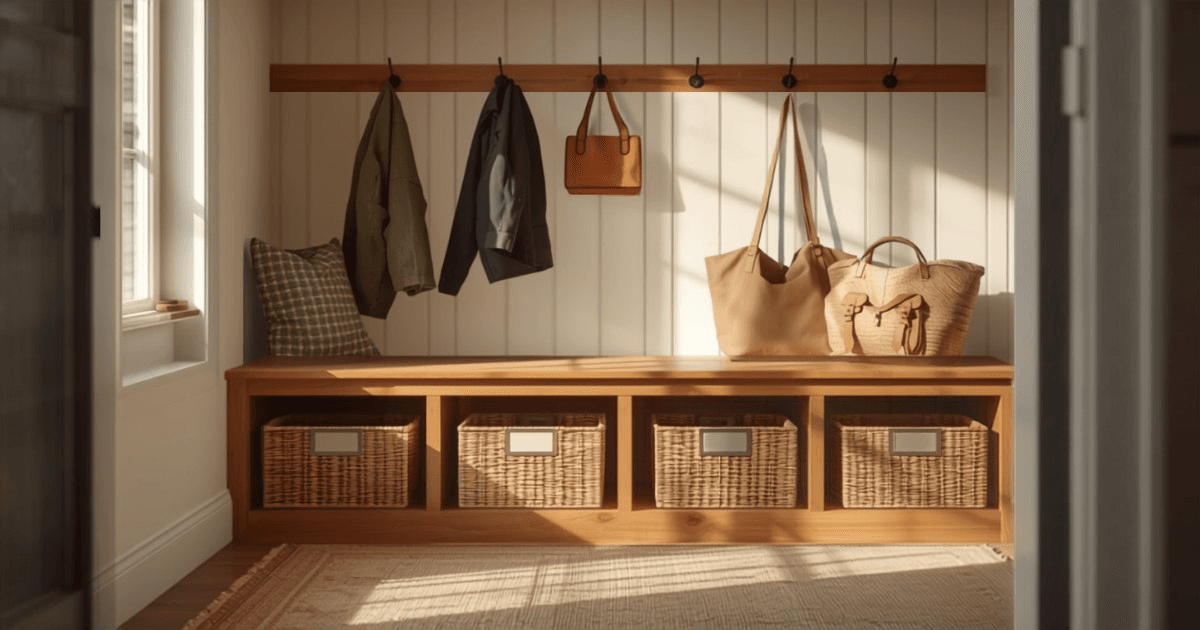
Entryway benches with built-in storage underneath provide seating while concealing clutter. Family members can sit to remove shoes while compartments below store seasonal items, shoes, or gear. Look for benches with individual cubbies or drawers that assign each person a dedicated space. This personalization makes people more likely to use the system consistently.
Coat racks with integrated shelves and umbrella stands combine three functions in one footprint. The coat rack handles outerwear, the shelf holds hats and accessories, and the umbrella stand prevents wet umbrellas from creating puddles on your floor. This consolidation saves precious floor space.
Ottoman-style storage boxes work particularly well in tight entryways because they double as additional seating, footstools, or a surface for setting bags while unlacing boots. Unlike traditional storage benches, these boxes can tuck under floating shelves or into corners when not actively needed.
Wall-mounted cabinets with doors create visual tidiness because contents stay hidden. Choose cabinets with a shallow depth--6 to 8 inches rather than standard 12-inch cabinetry--to avoid protruding into your traffic path. Glass doors on some compartments can display decorative baskets containing frequently accessed items while other sections stay opaque.
Establishing a Zone System
Even small entryways benefit from a zone system that assigns specific areas to specific purposes. This organizational framework prevents the mudroom from becoming a catch-all for everything that enters through the door.
Create a wet zone near the entrance where items come directly from outside stay temporarily. This might include a drip tray for wet boots, a hook for wet coats, and an umbrella stand. The wet zone should be positioned closest to the door to minimize water tracking through the rest of your space. If you have tile or waterproofed flooring, position this zone over it rather than over carpet or hardwood.
A gear zone houses equipment related to specific activities. If your family is active outdoors, dedicate one wall section or cabinet to sports equipment, hiking gear, or cycling items. Keep all items related to that activity together so you can grab everything needed in one trip. This also makes it obvious when something's missing.
A personal zone assigns each family member a dedicated storage area. In small entryways with limited space, this might be a single shelf, a shelf and hook combination, or a cubby unit. When everyone knows their designated area, they're more likely to use it, and you'll avoid conflicts about whose items are whose.
An outgoing zone holds things family members need when leaving the house but would otherwise forget--school notices that need signatures, permission slips, packages to mail, keys, or lists of errands. Position this zone at eye level near the primary exit point so items remain visible and accessible.
A seasonal zone addresses items you need only during certain times of year. In spring and summer, this might hold snow boots and heavy coats in labeled bins on upper shelves. In fall and winter, this space contains lighter-weight shoes and jackets. By rotating seasonal items, you reduce the daily clutter significantly.
Containing Smaller Items Effectively
Mudroom organization for small entryways requires managing numerous small items that lack obvious homes: gloves, scarves, hats, keys, permission slips, shopping lists, and miscellaneous outdoor accessories.
Clear containers offer both function and visual organization. You can see exactly what's stored inside without opening them. Label each container specifically--"Winter Gloves," "Scarves," "Hats"--so family members place items in the correct spot and know where to look when needed. Clear containers work especially well in glass-door cabinets where aesthetics matter.
Basket organizing keeps items grouped while maintaining a softer, more intentional appearance than plastic bins. Natural baskets or woven storage containers fit better with most home décor than utilitarian plastic, especially in entryways visible to guests. Label baskets with tags or labels so the organizational system remains clear.
Drawer dividers in shallow entryway drawers prevent the "junk drawer" phenomenon. Designate one section for keys, another for gloves or mittens, another for scarves. This specificity makes items easy to locate quickly during rushed mornings.
Hanging organizers, including shoe organizers mounted inside cabinet doors or on walls, maximize vertical space while keeping items visible. The pockets of shoe organizers work perfectly for scarves, hats, goggles, or smaller items. This solution is particularly valuable when floor and wall space are both at a premium.
Managing Moisture and Dirt
In addition to organizational challenges, small mudrooms must manage practical issues that regular rooms don't face. Moisture, dirt, and winter salt create maintenance difficulties that require preventative design choices.
Position absorbent, washable materials in the wettest zone. A machine-washable rug inside the door catches initial moisture before it spreads deeper into the entryway. Ensure this rug sits on a non-slip backing so it doesn't create a tripping hazard when wet.
Install a boot tray or drip mat specifically designed for wet footwear. These trays have raised edges or drainage systems that contain water and prevent it from spreading across your floor. Some even feature removable liners that you can take to the sink to empty and rinse.
Ensure proper ventilation to prevent mildew and mustiness. Small, enclosed entryways are prone to moisture accumulation, especially when wet coats and boots sit in the space. If your entryway lacks windows, ensure your entry door includes a glass panel or consider adding ventilation through a cabinet with ventilation strips or an exhaust fan if feasible.
Choose furniture finishes and materials that resist water damage. Metal, sealed wood, or moisture-resistant composites work better than natural wood finishes that warp when damp. Cabinet interiors should be removable or wipeable to manage moisture buildup.
Creating Systems Your Family Will Maintain
The most beautiful mudroom organization fails if your household doesn't use it consistently. Effective systems must be simple enough that everyone, especially children, can maintain them independently.
Label everything. Not everyone organizes the same way you do. Clear, specific labels tell everyone exactly where items belong: "Daily Shoes," "Winter Boots," "Sophie's Coat," "Wet Umbrellas." Labels transform your organizational logic into universal instructions.
Assign one hook per person for daily coats rather than a general "coat" area. When each person has their designated hook, cleanup becomes simple: hang your coat on your hook. This prevents the pile-up of multiple coats on one hook while others remain empty.
Establish a "one item out, one item back" rule for seasonal gear. If you take out winter boots, you put away sandals. This rotation keeps both seasonal items accessible while preventing the mudroom from becoming a dumping ground for off-season equipment.
Create a weekly reset routine. Perhaps every Sunday evening, everyone spends five minutes returning their zone to order. Baskets get straightened, shoes get aligned, and hooks get cleared of accumulated debris. Regular maintenance prevents the system from degrading into chaos.
Small Space Design Strategies
Beyond organization, the overall design approach influences how spacious your small entryway feels.
Choose a light, cohesive color palette for walls, storage solutions, and accessories. Dark colors absorb light and make spaces feel smaller, while light colors reflect light and create visual expansion. A monochromatic scheme with varying tones of the same color family feels more expansive than mixing multiple bright colors.
Install lighting that makes the space feel welcoming rather than cramped. Ceiling fixtures provide general illumination, while sconces flanking a mirror add functional light and visual depth. Good lighting makes it easier to locate items and find missing shoes quickly.
Add a mirror to one wall. In addition to functional value for checking appearance before leaving, mirrors create the optical illusion of a larger space by reflecting light and expanding the view.
Keep pathways completely clear. Every square inch of floor space that's unobstructed makes the entryway feel more spacious and functional. Floor storage should be minimal; prioritize vertical and wall-mounted solutions.
Conclusion
Mudroom organization for small entryways represents a solvable puzzle rather than an impossible challenge. By maximizing vertical storage, selecting dual-purpose furniture, establishing clear zones, and implementing systems your family will maintain, you transform a cluttered drop zone into an efficient, attractive space. The key lies in understanding your specific constraints, being honest about what items you actually use, and choosing organizational solutions that match your household's lifestyle. When your small mudroom works with you rather than against you, the benefits extend throughout your entire home--cleaner floors, easier mornings, and a more organized entryway that actually sets a positive tone as family members enter and leave.